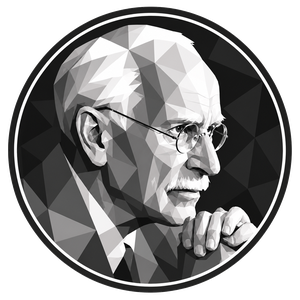

Ask Robert Tyminski what brings adolescent boys into his consulting room and he will tell you the words they most often use: I’m broken. They rarely know why. Something is wrong, they can’t explain it, and increasingly the screen in their pocket is both where the trouble plays out and where they hope to escape it. Now the San Francisco analyst turns to a harder question: what happens inside the therapist when a young person in the grip of first love, and of the digital world, sits across from them?
Next Saturday, October 24, Tyminski leads an online workshop hosted by The Journal of Analytical Psychology: “Working with Adolescents in Love in the Digital Age: Challenges in Countertransference.” It runs from 5:00 to 7:00pm London time, and you can register here.
A workshop you take part in, not just watch
This is an experiential session, not a purely theoretical one. Tyminski opens with a brief overview of how different psychoanalytic traditions have approached countertransference, framing it as both an analytic resource and a potential interference in the analytic field.
Then comes the part that sets it apart. He shows clips from the 2025 Netflix miniseries Adolescence, which follows a 13-year-old boy’s first infatuation as it turns into brutality. Participants are invited to write down and discuss their own feeling responses, using them as a route into analytic subjectivity. The session closes with clinical vignettes from Tyminski’s own work with adolescent patients, which participants work through together as a group. The aim is to keep countertransference tethered to felt experience rather than drifting into theoretical abstraction.
The analyst behind the workshop
Few analysts are better placed to lead it. Tyminski is an adult and child analyst member of the C.G. Jung Institute of San Francisco and a past president. He is a two-time winner of the Michael Fordham Prize from the Journal of Analytical Psychology (2016 and 2025). The latter award was for his paper on gender-expansive patients, which we covered earlier this year, including the response it drew from an international group of queer Jungians. His next book, A Practitioner’s Guide to the Male Psyche in Analysis and Psychotherapy: Under the Hoodie, is due from Routledge in early 2027.
Three books, one preoccupation
Tyminski’s published work keeps circling the same territory: what people lose, leave behind, take, and hide.
Male Alienation at the Crossroads of Identity, Culture and Cyberspace is the book closest to the workshop. It follows the male psyche from boyhood through adolescence into adulthood, drawing on clinical practice, current events, art, and literature. It asks why boys and men struggle to reach their inner worlds, and why that struggle can erupt as addiction, violence, or self-destruction. It examines compulsive internet use, rigid ideas of masculinity, difficulty with intimacy and showing emotion, and the part played by difficult fathers. Throughout, it contrasts meaningful contact with a merely transactional way of relating, and it offers practical ideas for therapists working with boys who insist they want to be left alone.
The Psychological Effects of Immigrating: A Depth Psychology Perspective on Relocating to a New Place asks why people leave familiar places and cultures behind. It approaches the question psychologically, historically, clinically, and mythically, with Virgil’s Aeneid as a literary companion. It looks at xenophobia, how children and adults acculturate differently, the trauma of seeking refuge, and the effects of COVID-19 on border crossings. It also questions whether “identity” has become a shorthand that flattens the stories of migrants and refugees. It is one of few books to approach immigration from a Jungian-oriented perspective.
The Psychology of Theft and Loss: Stolen and Fleeced starts with a deceptively simple question: why do we steal? Tyminski considers deprivation, envy, and the hunger for power. He uses the myth of Jason, Medea, and the Golden Fleece, together with case studies and cognitive research, to range across robbery, kidnapping, plagiarism, and technotheft. The book arrives at the idea of a perpetually present “inner thief”, and at the suggestion that an act of theft can bring hidden traits to light and, paradoxically, serve a person’s development.
Hear him think aloud
For readers wanting more of Tyminski’s own voice ahead of the workshop, he discusses The Heroic Code, Symbolisation, and the Wounds of Boys and Men on the Conversations For The End podcast. He focuses on how the classical heroic code of stoicism, strength, and bravery forces boys to build an inner wall that hides both physical and emotional pain. He also highlights the developmental distinction between direct signs and multi-layered symbols, which explains why many men struggle with symbolic reflection in therapy or relationships. The discussion stresses the need for men to expand their emotional vocabulary without seeing vulnerability as a feminising weakness. It also examines how modern screen use and social media foster hyper-regulated, curated online identities that block true self-reflection and healthy growth.
There is also a rich, wide-ranging conversation between Tyminski and Laura London on the Speaking of Jung podcast, centred on Male Alienation:
In this interview, Tyminski describes how he uses sandplay with children and adolescents, reading their scenes of knights, animals and monsters symbolically. A coffin, for instance, might speak of a childhood lost to illness rather than a fear of death. He traces the over-representation of men and boys in statistics on violence, incarceration and substance dependence to a deep alienation, from society and from their own emotional lives. He reads boys’ attraction to apocalyptic video games through the word’s original Greek sense of revelation, as an unconscious attempt to reveal something broken within. Taught to equate vulnerability with weakness, many young men adopt a rigid posture of dominance and board up their inner world like a house with “no trespassing” signs. Online spaces deepen this through splitting, flattening empathy and reducing relationships to thumbs up or thumbs down. Where adolescent boys say “I’m broken,” men in midlife often realise with despair, “I’ve missed it.”
Why join him on the 24th
That last contrast is the heart of the matter. A boy who says “I’m broken” can still be reached, but only by a therapist who can bear what the encounter stirs up in them, and a first love that curdles into something violent is the kind of material that tests that capacity hardest. If you work with young people, this is a rare chance to learn from an analyst who has spent a career listening at the door of that boarded-up house, and to do it with your own feelings as the working material.
Register for the workshop here.