
Mantis 2022 is here! This year we offer an exciting program comprising of a two-session panel discussion and three lectures, all reminding us of the deep abiding resources of creativity, vitality, imagination soul has access to. The lack of soul in our lives and materialistic culture leaves us damaged and adrift, unable to access soul’s enduring wealth of resources for healing and transformation. We trust that the presentations and panel discussion will be food for soul and so support your living a soulful life; soul being the connecting principle of life, its presence making life meaningful.
We look forward to welcoming you to the 2022 Mantis weekend presentations, offered again on the Zoom platform. We endeavour to create a virtual meeting place for those who are interested in Analytical Psychology and who appreciate the value of applying Jungian principles in modern life.
Why “Mantis”?
The Mantis symbol holds a special meaning for SAAJA: our founder members were deeply connected to the spirit of the San and their shape-shifting creator-trickster deity, Kaggen, who manifests as a praying mantis and other animal forms (hare, eland, snake, vulture). The SAAJA logo consists of four Mantis heads arranged in a circle. In Carl Jung’s work, we know the trickster as Mercurius or Hermes.
Our programme is presented by Jungian Analysts and Jungian oriented practitioners and researchers, who share their special insight from experiences in practice, research or field of special interests. SAAJA is a professional society of internationally accredited Jungian Analysts with its main focus training and accreditation of future Jungian Analysts.
Friday, 7 October
Lecture 1 | 19h30-21h00
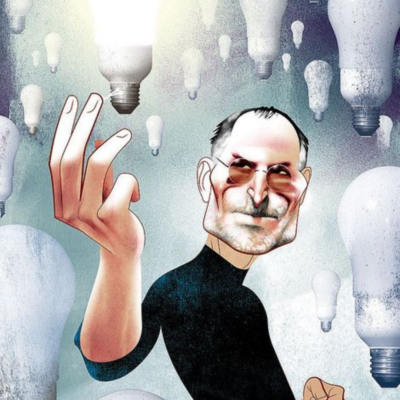
How advertisers steal our souls and how we steal our souls back. What Carl Jung would say to Karl Marx
Karl Marx coined the term ‘commodity fetishism’ 150 years ago to describe what happens under free market capitalism: we are seduced by producers to fall for the allure of market commodities and to forget the awful conditions of factory workers. Recent writers have again detailed the strategies by which modern advertisers likewise hide appalling Third World workplaces and how advertising became sophisticated in manipulating the unconscious desires of consumers. They use the term ‘surveillance capitalism’ to indicate how carefully and secretly we are watched. Paradoxically, given his highly critical opinions on Communism, Jung was close to Marx in explaining how the collapse of religion had made modern people unconsciously vulnerable to a list of -isms, among them consumerism. Other writers have shown how a new generation of ‘consumers’ turned consumer goods into objects of spiritual worship and have shown the ignorance and clumsiness of advertisers.
Saturday, 8 October
Panel Discussion Part 1 & 2 | 09h00-10h30 & 11h00-12h30
Trigger Warning: Breaking the silence and starting to peel away at the multiple layers of trauma in our country’s history, is a painful confrontation for each of us in a uniquely different way. The price we pay for holding up the constructed silence is reflected in our country’s grim statistics of substance abuse, violence and in particular gender-based violence. Our avoidance to engage with the deep wounds of historical trauma, stops us from acknowledging what happened and how it broke us as individuals and as a society. Since we cannot grieve and heal, our pain becomes our legacy to the next generation. We advise audience discretion as it is possible that the subject matter, embedded in the background of South Africa’s apartheid system and the violence of war, could be disturbing, triggering physical and mental reactions, including emotional distress. No one in the world knows how to open this dialogue in a sophisticated smooth way. We dare to try, imperfect and incomplete, with the faith that it will move us in the direction of healing through more dialogue and sharing.
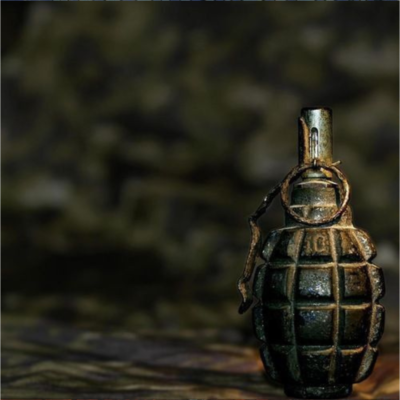
Conscripted Poet Documentary: Trauma and socially constructed silence
The militarization of half a million of young white men who were conscripted into the South African Defense Force between 1967 and 1992 remains an untold story of trauma and dehumanization. The young men’s soul destroying experiences were silenced, firstly by the Defence Act and further compelled by church, family, and political developments. Civilians were comfortable joining the pretence and maintain the silence, yet many, now middle aged men, lived lives of a quiet desperation, which insidiously destroyed the relationship fibre holding families and societies together. The resultant intergenerational transfer of trauma threatens the social fibre of our future. The morbid legacy of all the unresolved trauma in South Africa is too much for the next generation to bear and resolve. We cannot do much, but each has to gather courage and do what they can.
The possibility of starting a wider inclusive conversation about this socially constructed silence and its traumatic consequences is the objective which Kris, Maura and Tauriq set out to investigate.
While history books reflect the facts, the lived history of devastation, has not been told.
A ubiquitous story of the dark matter of wars and its effect on ordinary people is told in the anthology, Africa Ablaze!, where Kris Marais and others contributed poems called “graphic, unflinching and honest” by book reviewers.
Will it be poetry that may one day become our tool for peace?
Lecture 2 | 13h30-15h00
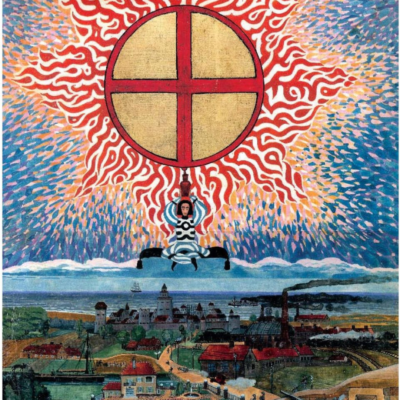
Fantasy, daydreaming and mind wandering
A very active field of research and clinical interest over the last decade is on the dynamics of daydreaming and mind wandering, and how it relates to the so-called Default Mode Network in the brain. This is the network that has been shown to have background activity while humans are not actively engaged in the outside world with a complicated or structured cognitive task. When awake and merely sitting down, lying quietly, strolling or doing some routine or monotonous tasks that don’t require much thinking effort, this Network in the brain shows typical activation patterns that are filled with significance and psychological meaning.
When we consider the various functions of the clusters in this Default Mode Network, it is fascinating to conclude from that the content of our fantasies, daydreams and mind wanderings. Multiple studies have shown many advantages to allocating some daily time to daydreaming, and that it is, and was, a daily routine of many well-known and especially highly productive and creative individuals.
Carl Jung’s so-called Black Books and Red Book contain a personal journal of extensive fantasies expressed through writing, art, images and symbols. Some of Jung’s practical guidelines, perceptive statements and usable insights from these books will also be touched upon during the lecture, especially for its relevance to one’s own understanding of spontaneous thought and its link to deeper psychological processes.
Sunday, 9 October
Lecture 3 | 09h30-11h00
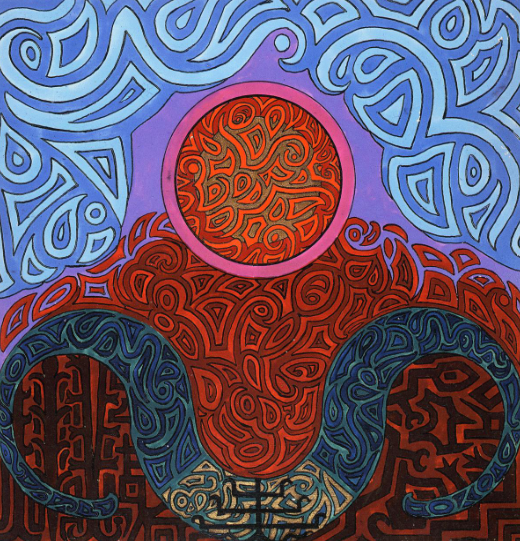
Jung on the birth of the divine child: Phanes
For Jung, the birth of the divine child was a lived experience, which he recorded in his Red Book. He says: ‘When a summit of life is reached, when the bud unfolds and from the lesser the greater emerges, then, as Nietzsche says, “One becomes Two,” and the greater figure, which one always was but which remained invisible, appears to the lesser personality with the force of a revelation.’ (Red Book, p. 217)
This seminar will delve into Jung’s personal experience of individuation through the birth of Phanes, the divine child. He explains further: ‘…the “child” paves the way for a future change of personality. In the individuation process, it anticipates the figure that comes from the synthesis of conscious and unconscious elements in the personality. It is therefore a symbol which unites the opposites; a mediator, bringer of healing, that is, one who makes whole.’ (CWV9.i, par 278)