
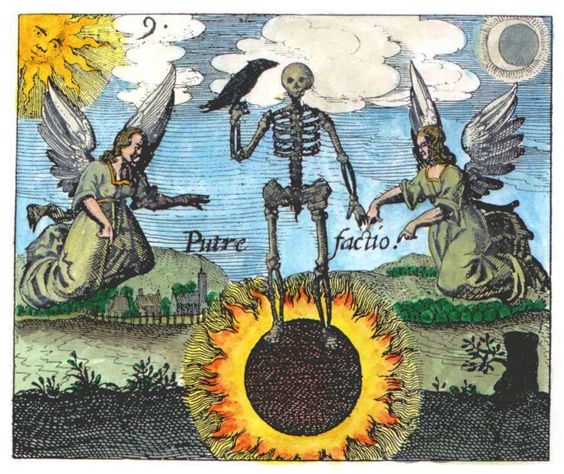
Nearly a century ago, when Freud and Jung witnessed the rise of fascism in Europe, they turned their keen depth psychological eye to cultural nigredo in works such as Civilization and its Discontents and “Wotan.” Jungians can follow their example by writing our way through today’s social, cultural, and political nigredo. Indeed, darkness is a writer’s friend.
Friday evening’s lecture describes how creative writing practice can thrive in the dark; indeed, it is nourished by the slow, somber, ruminative processes characteristic of nigredo. Jung described the creative process as the unconscious activation of an archetypal image, which is entwined with the artist’s fate. In the darkness of nigredo, the daimon, guiding spirit or genius of creative work can emerge with special poignance and clarity.
“The daimon motivates. It protects. It invents and persists with a stubborn fidelity,” says Hillman in The Soul’s Code, and often forces “deviance and oddity upon its keeper.” At a time when political leaders actively repress deviance and oddity, the presence of the daimon empowers Jungians to continue counter-cultural work: in our creative practices, in our professional life, in our communities and in the world.
