Saturday 7 October
Lecture 1: To Birth the Ancient in a New Time, is Creation | 9h00

Image credit: The Queen of the Night (The Burney Relief) – British Museum
The task of creative work entails weaving ‘something new and wonderful out of the tattered threads of culture and convention.’ (3) Inanna, paradoxical goddess of ancient Sumeria, has been making her appearance in the dreams of contemporary women. She mirrors the nature of human beings, the dualities within: ‘love/hate, compassion/indifference. She shows our oppositions in sharp relief… Wholeheartedly a goddess of war and destruction, she is equally a goddess of love.’ (1)
In this seminar, Renee Ramsden will reflect on what Inanna teaches us about what it means to be human, and on Jung’s prophecy of the birth of the new god – and wondering if this new god is not perhaps a rebirth of this ancient goddess.
- De Shong Meador, B. (2000) Inanna, Lady of the Largest Heart. C. G. Jung Foundation of New York
- Jung, C. (2009) The Red Book. Philemon Foundation
- Popova, M. Rilke on Inspiration and the Combinatorial Nature of Creativity.
Lecture 2: On Meeting the Tiger: Three Psychoanalytic Mystics and Their Contributions | 11h00

Bion stated: “Psychoanalysis itself is just a stripe on the coat of the tiger. Ultimately it may meet the Tiger – the Thing Itself – O”. Psychoanalysis has historically viewed mystical and meditative states of consciousness as regressive, defensive or frankly pathological. An emerging group has embraced and explored mystical experiences while retaining the profound value of psychoanalysis. The presentation will explore the contributions of Bion, Eigen and Grotstein and show how they have navigated the interface between the two realms. We will attempt to go beyond the familiar understanding of ego strength versus ego transcendence, and spiritual bypassing. In fact, profound meditative experience far from “bypassing” psychodynamic issues may in fact evoke primitive, pre-conceptual experience. This needs to be handled with nuance and sensitivity.
Lecture 3: Astrological Birth Charts: Sacred Mandalas of the Self | 13h30
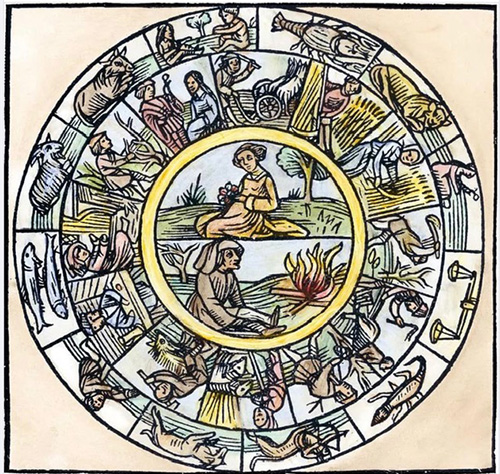
A birth chart is a profound synchronicity between the moment of birth and the unique formation of the observable cosmos at that time, with every chart as different as fingerprints. Carl Jung observed that the astrological horoscope corresponds to “a definite moment in the colloquy of the gods”; a symbolic portrayal of universal principles, the archetypes, as they were also personified by the gods and goddesses of ancient myth. Much of Jung’s work grew out of studies of ancient texts, such as the Hermetica treatises, that explore astrology, medicine, pharmacology, alchemy, and magic. These date as far back as the second or third century BCE.
The familiar phrase “As above, so below, as within, so without, as the universe, so the soul…” – attributed to Hermes Trismegistus (a syncretic combination of the Greek god Hermes and the Egyptian god Thoth) – comes from the second verse of the Hermetic Emerald Tablet. It alludes to the effects of celestial mechanics upon terrestrial events including not only the effects of the Sun upon the change of seasons, or those of the Moon upon the tides, but also structural similarities (or ‘correspondences’) between the macrocosm (from Greek makros kosmos, “the great world”; the universe as a whole, understood as a great living being) and the microcosm (from Greek mikrons kosmos, “the small world”; the human being, understood as a miniature universe).
Thus, the heavens were viewed as a symbolic reflection of Divine guidance towards gaining insight into the human psyche in relationship to the deeper mysteries of the universe. The moment of birth, as represented in the Western astrological wheel, is a mandala encompassing the whole, the Self, and gives clues to the individual’s unique work towards integration and individuation. These concepts and correspondences are discussed during this presentation.
Lecture 4: No More Lies: The Truth About Unprocessed Trauma | 15h00

Image credit: Dion Hitchings, I eat Under the Blue Moon
What are the lies we tell ourselves? That our childhood was just fine… well maybe not totally fine, but “alright”? To acknowledge the trauma inflicted on our trapped, helpless, younger selves takes enormous courage. We fear what we may discover – and go to great lengths to avoid our unprocessed trauma.
In this seminar, John Gosling will present the myth of the Wounded Healer (Chiron in Greek mythology). Chiron has become a symbol of the transformative power of suffering and the capacity to empathize deeply with others’ pain. He will discuss how our willingness to suffer the traumas inflicted on us can initiate us into our individuation process and our deep humanity.
He will explore the consequences of our unprocessed trauma and how it may influence every facet of our lives; and offer a group experiential experience of processing a recent trauma as an example of one of the ways of reducing the impact of trauma in our psyches.
Sunday, 8 October
Lecture 5: Looking Behind Archetypes: Their Origin and Underlying Nature| 09h00 (Online Participation Only)

Jung’s archetypal theory postulates that archetypal images are derived from more basic underlying structures which he called the “archetype an sich” or “archetype as such”. These structures, or rather organizing principles are, according to Jung, latent and only become manifest and knowable when they give rise to archetypal images in the human psyche.
In this seminar I am going to suggest that these basic organizing principles, the archetypes as such, might be understood as a tendency to promote homeostasis/predictability and alternatively a tendency towards dissolution/unpredictability and transformation. Peter Hodson suggests that all archetypal images can be thought of in terms of their homeostatic or transformative character or as a combination of the two.
He will discuss how these ideas have been informed by recent developments in neuroscience and consciousness studies, and how they find a rich resonance Jungian thought. These archetypal principles of homeostasis/transformation, have always been fundamental to self-organizing systems both animate and inanimate and predate human consciousness. However, with its emergence, they have become visible and symbolically represented in the mythopoetic creations of the human psyche and the psychic life of the individual. He will illustrate this with reference to Joseph Campbell’s myth of the Hero’s Journey and case material.