
July 15-19, 2024
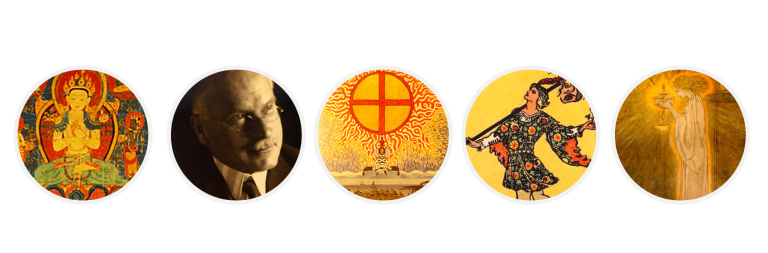
The theme of our 2024 Summer Study program is The Symbolic Quest, finding psychological meaning and wholeness across various traditions, beginning with Mindful Imagination: Exploring the Convergence of Active Imagination and Buddhist Meditation. We follow with a session that will explore what was central to much of Jung’s life: The Quest for Life’s Questions, with reference to his Memories, Dreams, Reflections, in which he examines the questions that he could answer and those he could not. Mid-week we go deeper into Jung’s descent into the unconscious in C.G. Jung’s Inner Quest and His Concerns for the Modern World. In our Thursday seminar, The Quest for Wholeness through the Archetypal Images, we discuss the Tarot as a tool for self-reflection and insight, which has gained popularity in the last decades. We conclude the week with The Mythic Journey: The Quest for the Holy Grail, in which we will examine the myth of the Holy Grail as an unsurpassed container of meaning with symbolic and psychological content pertinent to our age and state of being.
Welcome and Orientation
Monday, July 15 |11:45 am – 12 noon ET

Mindful Imagination:
Exploring the Convergence of
Active Imagination and Buddhist Meditation
Monday, July 15 | 12:00 noon – 3:30 pm ET
This workshop invites participants to engage in a rich dialogue between the principles of active imagination, rooted in analytical psychology, and non-reactive cultivation of Buddhist meditation. Together, we will navigate the intricate landscapes of these practices, seeking common threads and uncovering the potential synergies to deepen psychological work. In addition to regular slide presentations, Dr. Cheng will foster experiential exercises and group discussions related to both practices to invite embodied experiences. Join us as we embark on a journey of cross-fertilization of active imagination and two primary forms of Buddhist meditation.
Participants will be able to:
- Explore the Historical and Theoretical Foundations of Active Imagination and Buddhist Meditation
- Conduct Comparative Analysis: Examine the Prerequisites, Stages, and Goals of Both Practices
- Reassess Perceptions of “Passive” Imagination in Buddhist Meditation based on Real-time Practice
- Integrate Buddhist Meditation into Active Imagination: Learn an Integrative Model of “Mindful Imagination” to Enhance Depth Psychology Work
Instructor: Wen-Yu Cheng, PsyD
 The Quest for Life’s Questions
Tuesday, July 16 | 12:00 noon – 3:30 pm ET
Jung wrote Memories Dreams Reflections at the end of his life, and it is full of his life questions. The ones that he could answer and the ones that he could not. The questions that he dared to ask, and the questions that he was terrified to ask. Asking the questions for Jung gave him meaning, saying “the meaning of my existence is that life had addressed a question to me. Or conversely, I myself am a question which is addressed to the world.”
Quest and question have the same etymology and come from questioun, which means a philosophical or theological problem that led to a discussion, a seeking, or an inquiry. Asking a question of our lives initiates a quest of some sort. Jung adds that we must ask the questions that challenge the whole personality. When we ask a question, we initiate a quest.
These are the questions of our lives, and embarking on the search for answers is a heroic journey. Using the questions that Jung posed in Memories Dreams Reflections, we will explore the various questions that life asks of us and how we approach them with courage and resilience to further our individuation.
Participants will be able to:
- Describe how Jung experienced questions in his life that lead him to quantify his theory of the psyche
- Explore the big questions that analytical psychology poses to further our individuation
- Describe how the psyche brings these questions to us to ponder and to explore
- Explore in solo reflection and in discussion with others the questions that life poses for them
Instructor: Christina Becker, MBA, RP
 C.G. Jung’s Inner Quest and
His Concerns for the Modern World
Wednesday, July 17 | 12:00 noon – 3:30 pm ET
“The main interest of my work is not concerned with the treatment of neurosis but rather with the approach to the Numinous. But the fact is that the approach to the numinous is the real therapy . . .”
C.G. Jung, Letter to P.W. Martin, 20 August 1945, Letters, Vol. 1, p.377
From a young age, Jung was mystified, intrigued and illuminated by his “Turd/Phallus” dream and the experience of the immediate living God. This, along with his descent into the unconscious, described in The Red Book, gave Jung insight and clarity about how to approach his therapeutic work and ongoing soul search. For Jung, the Quest became the process of individuation and the search for Soul and unity within Modernity.
In Aion, CW, Vol. 9ii, Jung discussed the death of Western Spirituality due to Rationalism, Materialism and Modernism. He was concerned about the loss of religious symbolism and hoped to heal modern man by reanimating the connection with Soul.
This seminar will emphasize Jung’s spiritual, familial and environmental history along with their influence on his life and work through presentation and discussion. Modernity’s impact on the individual and society, along with Jung’s solution to finding God within for healing and wholeness, will be practiced through Active Imagination.
Participants will be able to:
- Identify Jung’s “Turd/Phallus” dream and its significance
- Describe Jung’s concerns about Rationalism, Materialism and Modernism in relationship to the death of Western Spirituality
- Identify Jung’s spiritual, familial and environmental history and its influence on his work
- Engage in an Active Imagination experience
Instructor: Jane Selinske, EdD, LCSW, LP, NCPsyA-LP
 The Quest for Wholeness through
the Archetypal Images of The Tarot
Thursday, July 18 | 12:00 noon – 3:30 pm ET
C.G. Jung was known to use the I Ching to allow the laws of synchronicity to shed light on a situation in question. In this seminar we will introduce a different yet similar tool for self-reflection and insight that has gained vast popularity in the last decades, the Tarot. We will focus on the 22 trump cards and see how the imagery reflects in symbolic form the processes of change that Jung thought of as individuation. We will give particular focus on the psychological challenges when encountering the archetypal forces represented in the cards.
No prior experience with the Tarot necessary. The images used will be from the Rider Waite deck.
Participants will be able to:
- Describe the historical, philosophical and psychological context of the twenty two major arcana of the Tarot.
- Describe how the imagery is reflective of the archetypal dynamics in the process of individuation.
- Amplify selected images and understand the psychological challenges in the imagery.
Instructor: Heide M. Kolb, MA, LCSW-R, NCPsyA
 The Mythic Journey:
The Quest for the Holy Grail
Friday July 19 | 12:00 noon – 3:30 pm ET
A symbol loses its magical or, if you prefer, its redeeming power as soon as its liability to dissolve is recognized. To be effective, a symbol must be by its very nature unassailable. It must be the best possible expression of the prevailing world-view, an unsurpassed container of meaning; it must also be sufficiently remote from comprehension to resist all attempts of the critical intellect to break it down; and finally, its aesthetic form must appeal so convincingly to our feelings that no argument can be raised against it on that score. For a certain time, the Grail symbol clearly fulfilled these requirements, and to this fact it owed its vitality, which, as the example of Wagner shows, is still not exhausted today, even though our age and our psychology strive unceasingly for its dissolution—
C.G. Jung, CW, Vol. 6, ¶401.
The search for the Holy Grail has captivated the western world since Chrétien de Troyes’ twelfth century story of Perseval, Thomas Malory’s fifteenth century Le Morte d’Arthur and T.S Eliot’s The Waste Land, written in the twentieth century. Fascination with the quest is connected, in part, to its deep archetypal meaning, the meeting of the opposites and the capacity to heal the wasteland in our souls with that conjunction. This workshop focuses on the quest for the Grail.
Participants will be able to:
- Define the Grail Quest as an archetypal quest
- Explain the psychological importance of working with the opposites in the Grail Quest
- Define the Grail as a symbol and explain the importance of that symbol in everyday life
