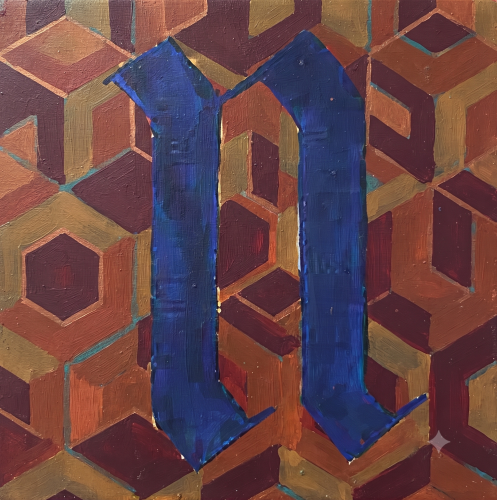
This series offers a close and substantial reading of The Red Book: Liber Novus across four two-hour seminars. In each session, participants read the text aloud, situate it within its historical context, and consider relevant intertexts. The seminar addresses the meaning of the text, its personal impact on readers, and its implications for clinical practice. As The Red Book presents much of Jung’s material in visual form, the seminar examines these images in detail and reflects on their significance. Participants are encouraged to use break times and the close of each session for informal conversation with the instructor and with one another. Light refreshments will be provided.
This session covers Liber Secundus, Chapter 16, “Nox Tertia.” Jung recounts his personal experience of “accepting the lowest” through further imagined experiences within the madhouse. The seminar will examine Jung’s proposition that, under “the law of love,” nothing can be cast out—evil must be accepted rather than avoided if a new God-image is to be born within the human subject.
Learning Objectives
- Describe the historical significance of Jung’s Red Book: Liber Novus in the development and practice of analytical psychology.
- Describe the historical significance of Jung’s Black Books in relation to Liber Novus.
- Describe the term active imagination and explain its clinical use in analysis.
- Give an example of how Jung used active imagination in his confrontation with the unconscious.
- Describe how Jung’s theory of the archetypes arose from the experiences recorded in Liber Novus, and give a clinical example.
- Describe how Jung’s theory of the collective unconscious arose from the experiences recorded in Liber Novus, and give a clinical example.
- Describe what Jung meant by “the objective psyche,” and give a clinical example.
- Compare Jung’s account of initiatory experience in Liber Novus with clinical analytic training and the practice of analysis.
Recording:
The program will be recorded. The recordings for Parts 1-12 will be made available to those who sign up for Parts 13-16. They will be available to view from August 7th to September 4th.
In preparation for the upcoming lectures on the Red Book, George Bright asks that you all have a copy of the reader’s edition on hand.