Halloween is the one night of the year when the culture lets its shadow out for a walk, in costume and with sweets. Jungians have never needed an excuse to take the monsters seriously. This year there are three events that do exactly that, an essay to read, and three talks to watch afterwards.
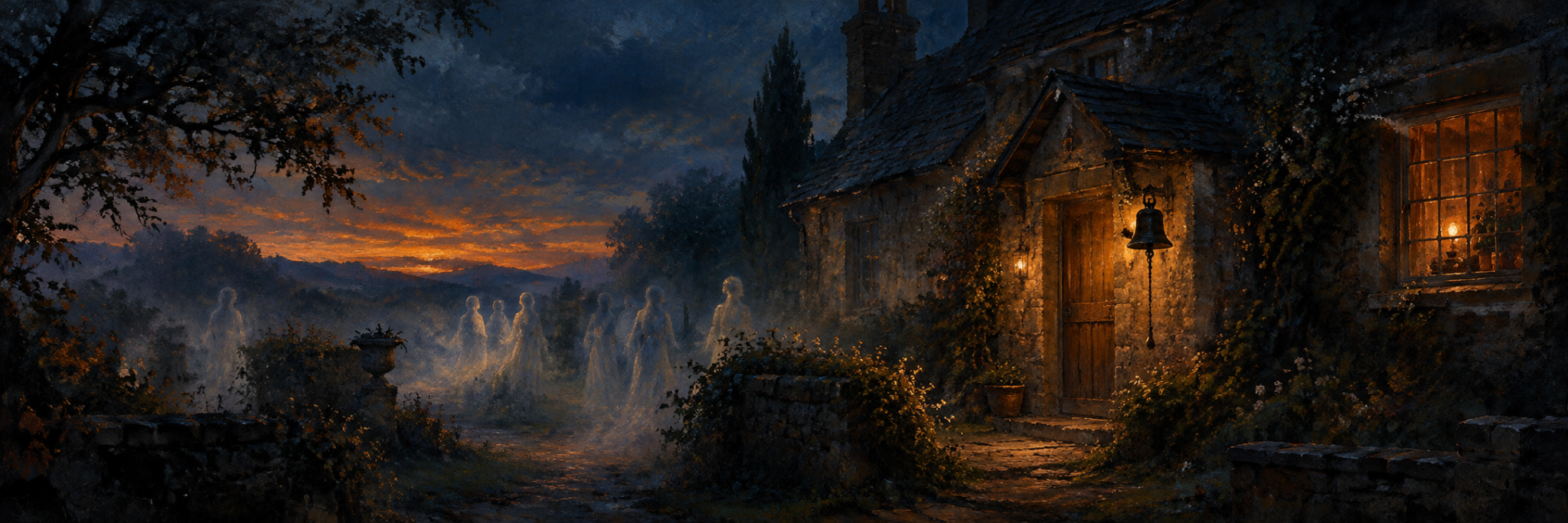
Jung’s most famous encounter with the dead came in 1916. His house felt crowded with restless presences. His children saw and dreamed disturbing things, and the doorbell rang with no one outside. The dead, he reported, spoke: “We have come back from Jerusalem where we found not what we sought.” He wrote the Seven Sermons to the Dead over three evenings, and the haunting ended. It is a good lens for At the Threshold of the Dead: Samhain, Liminality, and the Journey Between Worlds, a free online talk by mythologist Dr Selena Madden, hosted by Morbid Anatomy this Saturday, 31 October. She looks at the roots of Samhain and untangles some modern ideas about the “thin veil” between worlds. She also explores myths of descent, such as Orpheus, Persephone and Psyche. The evening ends with a guided ritual of threshold, descent and return, approached symbolically and without trying to actually summon the dead. Bring a candle, a bowl of water, a small offering, a stone and a journal. Replays are only for Morbid Anatomy’s Patreon members, so it is worth attending live. It takes place at 7pm New York Time and you can register here.
If you would like to read about Halloween itself, Vlado Solc’s essay “The Witching Time of the Soul: A Jungian Reflection on Halloween and Death” traces the festival from the Celtic Samhain, the end of summer and the start of the dark half of the year. He follows it through its blending with the Roman feasts of Feralia and Pomona, and then with the Christian All Saints’ and All Souls’ days. His argument is that rituals like this give our fear of death a face and a safe container, so that it can be met. Ghosts, he suggests, are the fears and unlived parts of ourselves, which return in compulsive forms when we deny them. They return, for example, in our appetite for horror and violence. The essay is on the C.G. Jung Institute of Chicago’s blog.
The same myths of descent return in a workshop in November. Jungian psychology reads the journey to the underworld as an image of the descent into the unconscious. Jung’s own plunge into his inner images, recorded in the Red Book, was in his words the most important time of his life. “Descent to the Underworld: Mythic Journeys to the Unconscious”, led by Alyssa Polizzi, is an online workshop from the Maine Jung Center on Sunday 22 November, from 2 to 4pm Eastern. It follows Persephone, Orpheus and Psyche, each pulled underground by abduction, grief or an impossible task, and each returned changed. The workshop reads these journeys as symbols of the unconscious and asks what inner resources such a passage demands. Get your tickets here.
The darker figure of Halloween is evil itself. Jung did not think evil was a mere absence of good. “Evil is terribly real, for each and every individual,” he wrote, and he doubted that the old doctrine of the privatio boni still held. For him, the darkness once given to the devil had moved into the human psyche. The shadow is our inner devil, and denying it only feeds it. That is the territory of “Dr Caroline Myss – The Spiritual Challenge of Confronting Evil”, an online webinar hosted by The Scientific and Medical Network on Wednesday 18 November, from 7 to 8.30pm London Time. Myss is a popular author and speaker on spirituality. She opens with a former cult member’s warning that the dark relies on our disbelief. She argues that it gets its hooks into us through small, everyday dishonesties. You can secure your spot here.
Watch After Dark: The Dead, Shadow and Evil
This Jungian Life has marked Halloween week with an episode on the dead, “Communicating with the Dead: Dreams, Visions and Visitations”. Hosts Lisa Marchiano and Deborah Stewart talk with Jungian analyst Robert Sheavly about the many ways the dead seem to reach the living. They look at the dreams and visions of the dying, which one hospice study found in 88 percent of patients, and at dreams that arrive at the moment a loved one dies. The conversation also turns to the Seven Sermons to the Dead and closes with AI “griefbots” that promise to bring lost loved ones back. Watch the full episode below.
For more on the shadow itself, Murray Stein’s interview “Jung, the Shadow, and the Problem of Evil” is on the New Thinking Allowed channel, with guest host Leanne Whitney. Stein talks about complexes, projection and levels of consciousness, and ties these ideas to scripture, such as the story of Cain and Abel. He also looks at shame as a root of evil, the difference between discernment and judgment, and the shadow of Euro-American culture. You can watch the full video below.
For a longer study of deliciously disdainful forces, there is a lecture by Bud Harris, a Zurich-trained Jungian analyst and the author of Confronting Evil. It is titled “Confronting Evil: A Jungian Guide to Searching for Light in the Heart of Darkness”. Harris begins with a caution. The sight of evil can stir up our own shadow, so watch your reactions. Most of us, he says, would rather put evil somewhere else, with other people. He follows Jung in treating it as real, and he starts with the evil closest to home. He walks through dreams from his practice and along the way he draws on Erich Fromm’s distinction between malignant and benign aggression. He ends where Jung does, with evil as a call to greater consciousness. Watch the lecture below