
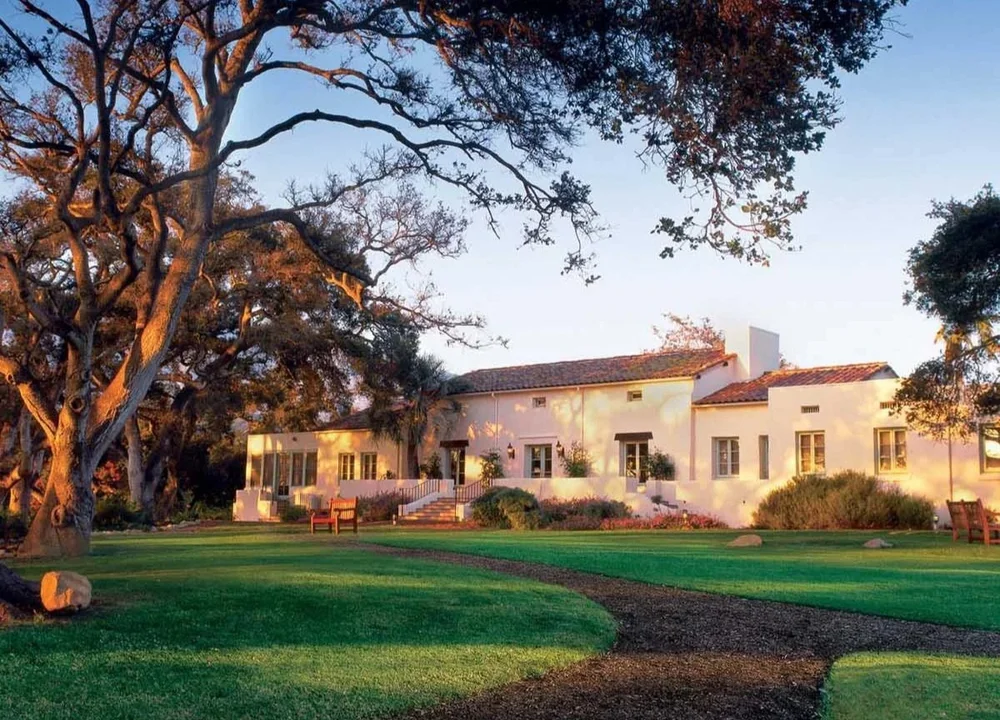
Fifty years ago, a small community counselling programme on the California coast began to grow into one of the best-known homes of depth psychology. On Thursday 5 November 2026, Pacifica’s founding president, Dr. Stephen Aizenstat, looks back on that story in “Celebrating 50 Years of Pacifica”, a free live-video discussion and Q&A hosted by Jung Archademy. Jung Archademy describes itself as an outgrowth of the community Aizenstat began, and the conversation will reflect on Pacifica’s history, its beloved luminaries and his hopes for its future. It runs from 4 to 6pm Pacific (7 to 9pm Eastern), and a recording will be available to all guests.
Pacifica dates its history to 1976, when the Human Relations Center offered a nine-month Counseling Skills Certificate. Its roots go back to a community outreach effort in Isla Vista, shaped by the Human Potential Movement and workshops at Esalen. Under Aizenstat’s leadership, the organisation moved from social services towards graduate education grounded in depth psychology. In 1989 it acquired an estate in Carpinteria and took the name Pacifica Graduate Institute. Doctoral programmes in Mythological Studies (1994) and Depth Psychology (1996) followed, and in 2005 it bought the Ladera Lane campus in Santa Barbara, becoming a two-campus school. Pacifica now reports more than 4,500 active alumni.
Joseph Campbell was an early supporter and frequent guest, and James Hillman and Marion Woodman were regular visitors to Santa Barbara. After Campbell’s death, his widow, Jean Erdman Campbell, donated his library of around 3,000 books and his archives, which were dedicated in 1992. Today the OPUS Archives and Research Center, a nonprofit on Pacifica’s campuses, holds the papers of Campbell, Hillman and Woodman, along with those of Marija Gimbutas, Christine Downing, Adolf Guggenbühl-Craig and Jane and Joseph Wheelwright. Access is free by appointment, and the collections can be searched online through the Online Archive of California. The 35-acre Ladera Lane campus sits in the coastal foothills, with views of the Pacific Ocean, the Channel Islands and the Santa Ynez Mountains. Its gardens, wooded paths and hiking trails make space for the quiet contemplation that has long been part of the Pacifica experience.
That landscape of quiet contemplation reflects Aizenstat’s own vision of depth psychology as a living, imaginative practice. Aizenstat is the creator of Dream Tending, an approach to dreamwork that treats dreams as living images to be tended rather than interpreted. His books are Dream Tending and The Imagination Matrix, and Jung Archademy has an interview with him about the latter. He speaks and leads workshops around the world, has advised companies and Hollywood film makers, and has spoken at the United Nations, where he is affiliated with the Earth Charter International project.
Those who want to try Dream Tending themselves have three chances this autumn and winter. On Wednesday 28 October, from 12 to 12:45pm Pacific, Aizenstat leads a free webinar on transforming nightmares. It covers his six-step method for nightmares, the difference between nightmares and night terrors, and somatic practices for staying grounded. On Saturday 7 November, from 9am to 12pm Pacific, he and guest teacher Louise Rosager lead “Introduction to Dream Tending”, an online workshop with a live tending of a participant’s dream, an introduction to the method’s skills of association, amplification and animation, and time to meet the Dream Tending community. For a deeper dive, the Dream Tending Certificate I Program runs from 15 January to 11 July 2027. It has four modules covering dream journals, dream practices, working with nightmares and the symbolism of dreams, taught by Aizenstat and Rosager.
The anniversary event is free, but its real offering may be the chance to pause and consider what it means that such a place has survived and thrived for half a century. In a world that is often too busy for contemplation, Pacifica’s continued life is itself a kind of achievement. You can register to attend here.