
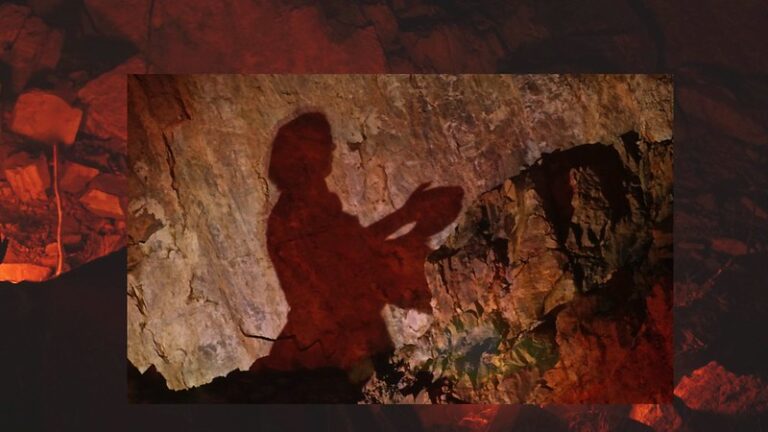
This presentation is a radically different take on the meaning of the Persephone myth. It comes out of a perspective that mixes Australian desert experience with old Mediterranean folklore and the harsh, confusing anxieties of the present time.
Friday night’s performance opens with extracts from Persephone’s Heart, on how and why she, as a ‘serpentine original creation being’, took human form and feeling. Then Wake reveals why Persephone leaves her body, refusing to return. Her husband, Hades, in profound grief, attempts to revive the life sustaining role which she renounced, desperately unhappy about how humans fail to take care of the integrity of earth’s nature. Her daughter and son are left with a challenge to carry on and care for future cycles of generative life.
Craig San Roque seeks greater engagement through unsettling means and his preferred mode is poetic writing and drama. Writing from his own experience of working with Australian Indigenous communities, San Roque links the devastating consequences of colonization on Australia’s traditional owners and their country to “the psychosis of the time” which “keeps one eye open and shuts the other.” San Roque identifies Jung’s Red Book visioning as Biblical and Northern European in heritage, before exploring his own hybrid visioning combining this same heritage with his knowledge and experience of Indigenous Australian literature, song cycles and practices. He asks himself “what unconscious fantasy drives my response to climate change anxiety?” His response emerges in stories – mythic and present time – of care for country, alive even in the midst of climate catastrophes, and an active imagination in the form of a community theatre work entitled ‘Persephone’s Wake’. This is a cathartic lament, full of anger, confusion, despair and love, which takes San Roque and his audience deep into a world where the old seasonal cycles celebrated in the ancient Near Eastern myths of Persephone and Demeter and Inanna can no longer operate, and Persephone dies from exhaustion, mourned by her children Kore and Kouros. The central question that surfaces through this, is the same as the one Jung responded to in The Red Book, “Will you accept this destruction?”
This is a question for us all now. To answer requires listening not only to the spirit of the times and the spirit of the deep, but also to the spirit of place, bringing consciousness to our embeddedness within the living world as our home, a central awareness within Indigenous cultures. We need to evolve depth psychological community practices in response to the climate and ecological crisis, not only to bear witness to and engage with the destructions and the dark impulses that drive it, but also to commit to creative actions of care for all beings rooted in place. San Roque refers to the interwoven “simultaneous care of sentient souls and care of ecosystems” as “the Persephone Impulse”. It is for each of us to connect to and give form to this impulse, countering a collective psychosis of disconnection and blindness to who we are and where we dwell, by fostering earth care and challenging destructive practices and beliefs based upon cultural myths of entitlement, exceptionalism and endless growth.