
“The child is endowed with superior powers and despite all dangers, will unexpectedly pull through… It is, equipped with all the powers of nature and instinct…The urge and compulsion to self-realisation is a law of nature and thus of invincible power, even though its effect at the start is insignificant and improbable”
— CW 9:1 The Psychology of the Child, para. 289
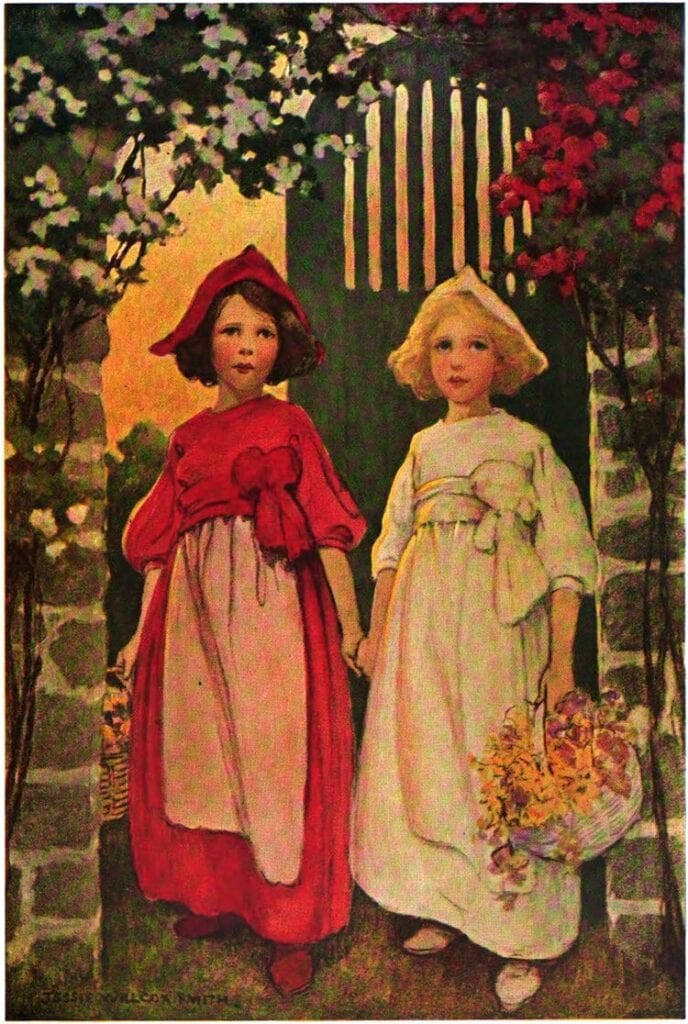
The Grimm brother’s tale of Snow White and Rose Red provides a deeper examination of the pre-pubescent child who faces adolescence with the absence of the Masculine principle. Its dire consequences are told in the language of fairy tale.
The feminine heroine facing this important developmental phase is represented by Snow White and Rose Red, two children living only with their mother, on the edge of a forest. Unlike any other Grimm brother’s tale there is an intriguing exception; these same sex siblings live in harmony, free from hostility even toward each other. This has created a big problem for the girls who are bereft of the internal conflict necessary in awakening the immature animus. Jung saw the necessity for the feminine to integrate the animus into the whole personality structure if she is to achieve her goal of individuation. But first, she must leave the maternal nest. The healthy psychological development of the adolescent is as crucial today as it was in times gone by.