
At the blowing of the wind and in the chill of winter; We remember them.
At the beginning of the year and when it ends; We remember them.
As long as we live, they too will live, for they are now a part of us as We remember them.
When we are weary and in need of strength; We remember them.
When we are lost and sick at heart; We remember them.
When we have decisions that are difficult to make; We remember them.
For as long as we live, they too will live, for they are now a part of us as, We remember them.
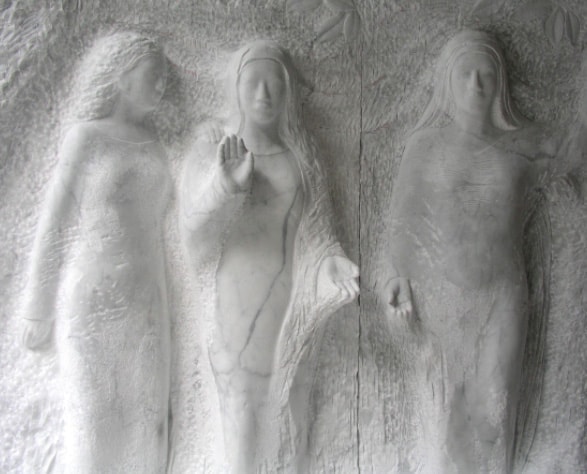
We remember the hidden Feminine who appears through the presence of Wisdom and the Shekinah. She is found in the stories of women in the Bible whose actions seek to restore the relationship between the holy and the human in supremely feminine ways.
We listen to the stories of women in the Bible, such as Judith and her maidservant who work together to restore the many transgressions which afflict the relationship between the human and the divine.
In this three-week seminar series, we will explore the movement of the feminine based on the theories of individuation, transformation, and suffering, both in the Hebrew Scriptures and the New Testament.
How does the feminine respond to the moral mandates of the Psyche/God; or to when the mandates are contravened by the collective? How does she find a way to restore the balance between the inner and the external world when transgressions disrupt the natural order? And so too, we must ask: what is the cost associated with following the holy laws against the laws of the collective?
These and other questions will be explored, as we follow the thread of the Feminine as she leads us in the dance of destruction, redemption, and transformation.
The Seminars
1. Suffering and transformation
Thursday, March 17, 2022
Rizpah: the woman whose life is exemplary of what Jung understood as the nature of Psyche/God and the necessity of suffering as transformational. According to Jung, suffering is the beginning of the individuation process. We will explore the archetypal and theological roots of suffering and meaning through the story of Rizpah.
2. Mater Dolorosas: The suffering mothers
Thursday, March 24, 2022
We will explore the archetypal dominant of sacrifice through the stories of Hannah and her seven sons, and Mary, mother of Jesus, to better understand how the feminine teaches us to live with the pain that is associated with authentic spiritual sacrifice.
3. Sinner and Saint
Thursday, March 31, 2022
The feminine expression as sinner and saint is often blurred by cultural conventions, stereotypes, and biases. We will explore the archetypal roots of sin and saintliness in the Hebrew Scriptures and the New Testament.