
C.G. Jung’s revelation of the mythopoetic dimension of the human psyche, i.e., its story-making structure, gave credence to his hypothesis of the collective unconscious, its archetypal images and their healing intent. In this seminar, we explore the wisdom hidden in the ancient Greek myths of Myrrha and the great god Pan. Together, we will discover the meanings and guidance these age-old stories can offer us today.
In the myth of Myrrha, we examine the theme of incest as perpetrated by a daughter with her father. We find that a repugnant act such as this appears in biblical stories, as well, and ask why the usual form of incest — a father’s violation of his daughter — gets turned on its head in these tales. We see the archetypes of the collective unconscious, the gods and goddesses, having their way with us but don’t understand why we should suffer so. We learn what it means to violate the gods’ sacred principles. and, if we take the lesson to heart, are chastened by it. We explore the relevance of these ancient stories to modern life by looking at their reflections in the troubled lives of clients in psychotherapy and characters in film to recognize the many variations on the theme of incest.
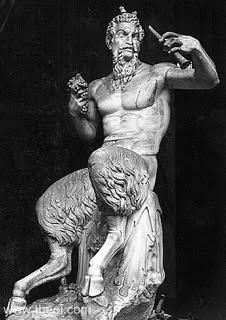
With the myth of the great god Pan, we will look into this god’s creation, not only as a symbolic example of the expression of psyche’s unconscious drama and its inner processes, but also as a means by which the ancients, and now ourselves, make sense of the world. We explore the classical beginnings of this beloved pastoral god as religious myth, and then the ways secular motifs and energies of the myth live on in modern society. We look at Jung’s views of myth for the second half of life, and we will explore ideas about our own personal myths as a means of interpreting the past, looking at the present and finding guidance and inspiration for the future.