
The 2026 Zurich Lecture Series Book – Available in October
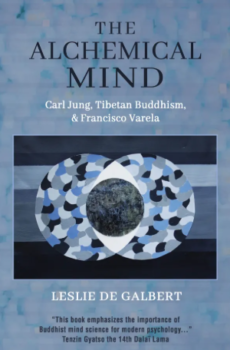
In The Alchemical Mind: Carl Jung, Tibetan Buddhism, and Francisco Varela, Jungian analyst Leslie de Galbert brings a new perspective to the relationship between Jung and Buddhism by introducing the work of Chilean scientist and philosopher Francisco Varela (1946‒2001). Jung stressed the importance of remaining faithful to one’s own cultural origins and found that Westerners were too rooted in Cartesian mind‒body dualism to be able to experience the nondualism of Eastern contemplative practices. Yet he also posited that the archetypes of the collective unconscious are universal. Can this paradox be resolved?
When His Holiness the Dalai Lama and Francisco Varela co-founded the Mind and Life Institute in 1987, they did so in the belief that interdisciplinary dialogues between Western scientists and Eastern contemplatives might offer new insights into the mind and consciousness. Varela brought not just neurobiology but also his concept of embodied enactive cognition into dialogue with the Buddhist epistemologies of Tibetan monastics.
Galbert shows how analytical psychology resonates deeply with this idea of openness and dialogue as a means to building a bridge between different viewpoints and different cultures. The Alchemical Mind lays down a path where an encounter between analytical psychology, Tibetan Buddhism, and the ideas of Francisco Varela enriches and deepens our understanding of mind.
Table of Contents
INTRODUCTION
CHAPTER ONE: JUNG AND THE MIND/BODY PROBLEM
CHAPTER TWO: JUNG AND THE EAST
Confrontation with the Unconscious
Jung’s Typology
Jung and the East
Synchronicity
CHAPTER THREE: VARELA AND TIBETAN BUDDHISM
Varela and Buddhism
Autopoiesis and Enaction
Varela and the Dalaï Lama—The Mind and Life Dialogues
Varela and Jung
CHAPTER FOUR: BUILDING BRIDGES
Dialogue: Eranos and Mind and Life Europe
Mandalas—A Triangulation of Spirit, Life, and Art
CHAPTER FIVE: A CONVERSATION
CHAPTER SIX: CONNAÎTRE – SAVOIR
Knowing and Knowing
Language and Writers as Translators
CHAPTER SEVEN: RESOLVING THE QUESTION OF MIND/BODY DUALISM
Dialogue for a Better World: Remembering Francisco Varela
The Evolution of the Scientific Mindset in the West
Meanwhile, in the East
Bringing Jung to the Table
And Back to Varela
CHAPTER EIGHT: WHY THE ALCHEMICAL MIND?
A Middle Path
Embodied Enaction as Alchemical
Active Imagination as Alchemical
Mind as Alchemical
EPILOGUE
Acknowledgements
Bibliography
Index