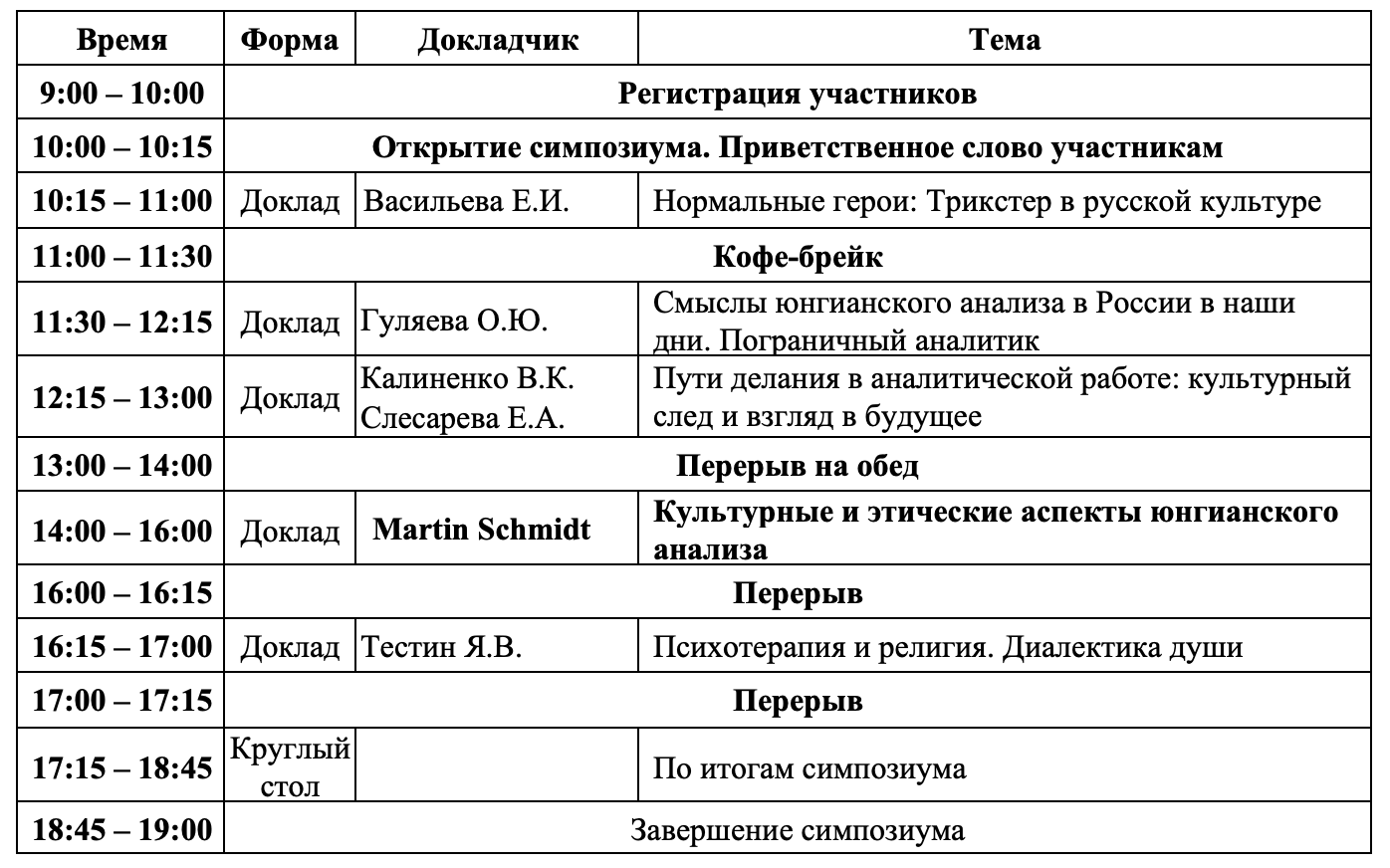
Martin Schmidt, MBPsS (Member of the British Psychological Society) is a Jungian training analyst, member of the Society of Analytical Psychology (SAP, London).
Lecture topic: Cultural and ethical aspects of Jungian analysis
The lecture explains why analysis is an ethical task, the basis of which is the preservation of the “analytic” or “symbolic” attitude. The characteristic features of the analytical attitude are described, as well as those personal qualities of the analyst that are necessary to maintain it. A comparison is made of the ethical position in Jungian analysis and in classical psychoanalysis (Freud, Klein). Jungian analysis is closer to relational psychoanalysis (for example, Mitchell, Greenberg) than to classical psychoanalysis. Through my experience working in different countries, I look at the cultural differences that influence analytical work between countries such as the UK, Russia and China.
Vasilyeva Elena Ivanovna – Ph.D. cultural studies, supervisor and training analyst of AAPR, ROAP/IAAP and ECPP, St. Petersburg.
Topic: Normal heroes: Trickster in Russian culture.
“In its most vivid manifestation it is the true reflection of an absolutely undifferentiated human consciousness, which corresponds to the soul that has barely left the animal level.” As consciousness develops, the Trickster apparently goes through the same stages (according to M.-L. Von Franz) as the Animus/Anima: Animal, the Deceiver itself, the Poet (the Logos stage) and the Savior. Remaining an archetypal figure, that is, belonging to the unconscious with its laws, at all stages of development the Trickster performs good and evil miracles, for the laws of the unconscious are always miracles for consciousness. Can we say that at each stage of development the Trickster figure has its own Shadow? Or is this how our consciousness itself sees it? I will try to illustrate this with images of the Trickster in Russian literature of different historical periods.
Gulyaeva Olga Yurievna – Jungian analyst and supervisor of IAAP/ROAP, neurologist, Moscow
Topic: The meaning of Jungian analysis in Russia today. Border Analyst.
In a situation of acute global trauma, the noospheric consciousness of humanity is experiencing severe crises. Trauma deals more and more blows to the collective soul. Often the trauma is split off, repressed, and sometimes partially realized. But it is not always lived out. Because there is no possibility of grief yet. And this process is strong in Russia. We’ll talk about the reasons in the report.
The cultural and ethical aspects of the relationship between the Russian analyst and the analysand in this situation occupy a very important place. The analyst needs to maintain this complex position of accepting uncertainty, often incompatible with his own ethical principles. And how does this connect to the realities of current trauma, particularly in our cultural field? How to protect the client’s health during this time? I would like to share my difficult experience as a therapist and supervisor: how to maintain the middle position of a Russian Jungian psychologist in this noospheric rift of collective and personal old, including historical, cultural and ethical paradigms. How to live your internal border process, your “internal earthquake” and the loss of support for the “stable familiar and unimaginable other.” How to find your rightful place not only for a Russian Jungian psychologist, but also for Russian Jungian psychology in the world.
Vsevolod Konstantinovich Kalinenko – Ph.D., author of books on Jungian analysis, training analyst and supervisor of ROAP/IAAP, Moscow
Ekaterina Aleksandrovna Slesareva – psychiatrist, suicidologist, candidate ISAP Zürich, Moscow
Topic: Analysis as underground: as cultural complexes and the history of underground culture influence our work
We will look at how the culture of the underground (Dostoevsky’s underground man; underground psychoanalysis in the USSR; underground) is included in the Russian cultural unconscious and how it manifests itself in analytical practice and the history of the development of psychoanalysis in Russia. Our main thesis: the totalitarian object (M. Shebek), the legacy of the Soviet era in the unconscious, causes the marginalization of depth psychology and psychotherapy in general, and the corresponding defenses, both among patients and practical psychologists. The result, in particular, is a significant analytic work/real life polarization and corresponding acting outs.
Testin Yakov Valerievich (Arkhimnadrit Jerome) – candidate of theology, doctor of philosophy in psychology (PhD), analytical psychologist, full member of the Russian Psychoanalytic Society (Moscow), St. Petersburg
Topic: Psychotherapy and religion. Dialectics of the soul.
The report reveals the experience of combining both a psychoanalytic approach and religiously oriented therapy.