
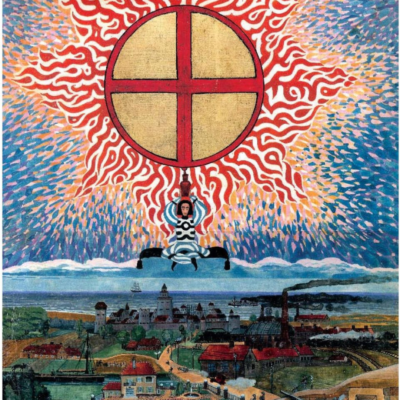
Dr. Carl Jung’s Red Book is one of the most mystifying books of the 20th century. The Red Book is a visionary work which Jung began in 1913, during a period of intense mental upheaval. It can be described in several ways: a private journal, an illuminated manuscript, a philosophical treatise, and a tome of Gnostic revelation. But to Jung it served as the catalyst for a revolutionary new model of psychology.
“The years when I was pursuing my inner images were the most important in my life—in them everything essential was decided. It all began then; the later details are only supplements and clarifications of the material that burst forth from the unconscious, and at first swamped me. It was the prima materia for a lifetime’s work.” —Memories, Dreams, Reflections, Dr. Carl Jung
In this free lecture, we will explore several questions which will serve as entry points into both The Red Book and Jung’s psychological theories, including:
-
Why did Jung create this work? Was it a personal pursuit or did he intend it for the public?
-
What method did Jung use to descend into his unconscious?
-
Jung’s stated aim in the beginning of the work is to ‘find his soul’. Does he find it? What does such a journey mean?
-
What are Jung’s primary psychological theories? Can they be traced to the visionary experiences of The Red Book?
-
Why does Jung and The Red Book matter in the 21st century?