
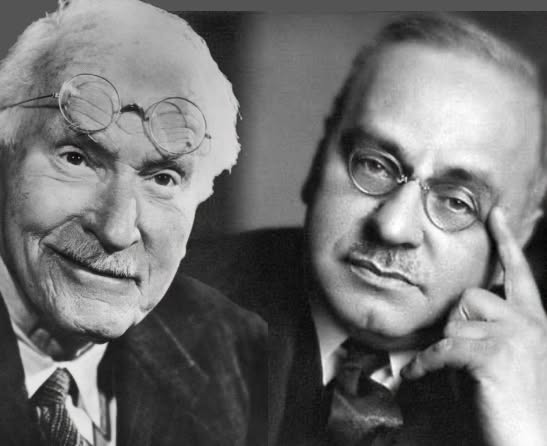
Jung makes it clear in many places that he considers there to have been two important psychologists whose work he is building upon. Sigmund Freud and Alfred Adler. The influence of Freud is well known amongst Jungians, but the influence of Adler is rarely acknowledged.
Both Jung and Adler based their psychologies on the collective and on individuation, although Jung’s collective is psychological and Adler’s is social. Putting the two together helps us to understand the collective unconscious more fully.
What they held in common was the move away from Freud’s reduction of human behaviour to sexual drives, towards the goal of a satisfactory life. They both embraced the direction towards wholeness and purpose, with a valuing of art as a mode of therapy. To some extent for Jung the personal and collective merge in what is socially denied, which is also a problem for Adler.
There are also significant differences. While, Adler did not deny unconscious processes, or the need to face their challenges, he was less interested in unconscious dynamics. His focus lay more on the necessity of facing life challenges, both regular and isolated.
This presentation attempts to bridge the gap between two fertile approaches and show how they complement each other. To illustrate what might be gained from this combined approach, I point to ways we can usefully face the collective crises of our age, especially climate and ecological losses.