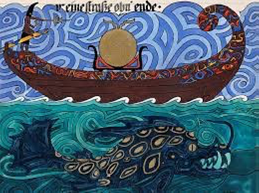
“Psychoanalysis demands a sacrifice which no other science demands of its adherents: ruthless self-knowledge. Practical and theoretical understanding of psychoanalysis is a function of analytical self-knowledge. Where self-knowledge fails psychoanalysis cannot flourish.” -C. G. Jung, CW4, par 156
In this series of 4 sessions, key concepts in Jung’s analytical psychology will be discussed in relationship to coming to know and be one’s self. Jungian analysis requires exploring the interplay between various elements of the psyche-the ego, the persona. the shadow, complexes, the archetypes of the collective unconscious, and the Self. The long, painful task of becoming conscious of and relating to these elements of the personality is at the core of Jungian analysis. Case material may be presented by participants to shed light on the inward journey to know oneself. Participants with any level of knowledge regarding Jungian analytical psychology are welcome.
Reading material will be suggested but not required.
Learning Objectives:
• Describe what is meant by self-knowledge.
• Describe the difference between the personal and collective unconscious.
• Describe what is meant by the ego from a Jungian perspective.
• Describe what is meant by the shadow and give a clinical example of a confrontation with the shadow.
• Describe what is meant by a complex and give an example of how a patient might be taken over by a complex.
• Describe what is meant by the term collective unconscious.
• Define archetype, and give an example of two archetypes from clinical practice.
• Describe the basic interplay between the ego. the persona, the shadow, complexes, archetypes of the collective unconscious, and the Self.
• Describe what is meant by Jung’s concept of individuation, and give an example from clinical practice.
• Describe what is meant by the archetype of Anima.
• Describe what is meant by the Archetype of Animus.
• Describe the role of Anima and Animus as guide in the individuation process.