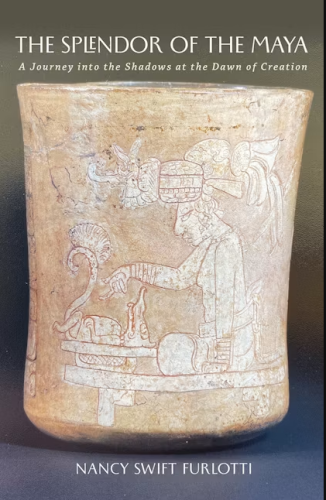
This seminar is intended to provide an in-depth exploration of the psychological significance of the Popul Vuh creation myth of the K’iche’ Maya people, recorded as far back as 300 BCE and preserved in the sixteenth century, and which remains part of a living cultural tradition. Beyond a myth that depicts the origins of the world, the Popul Vuh focuses on what it means to become a person, what makes one uniquely human, a parallel to the development of consciousness in the human psyche.
According to the myth, the first people were made of mud and clay, but there was no physical cohesion to hold them together. The second, or wooden, people could speak and reproduce words but lacked the ability to communicate verbally with others and the working memory needed to recall their creators. The third people were made from white and yellow maize, the fundamental food that sustains the K’iche’ people and that they grow. While the first maize people could see and understand almost everything, the creators restricted their vision so they would not become like gods. Psychologically, this myth teaches that in the Maya culture, to be considered fully human is to be relational, that one is part of nature rather than above it. Secondly, that failed creations are intrinsic to lived human experience, and that human limitation is considered an essential part of being human. We will examine some of the ways in which this myth portrays the emergence of human consciousness, the limitations of the ego, and the idea that life exists within cycles of transformation. Clinical examples will be used to illustrate each of these concepts.
Learning objectives
- Compare and contrast the development of the human being as exemplified in the Popul Vuh myth of creation with the Jungian idea of the development of consciousness.
- Give a clinical example of how to utilize the Popul Vuh creation myth to help a patient who is struggling to accept their limitations on a personal and archetypal level.