
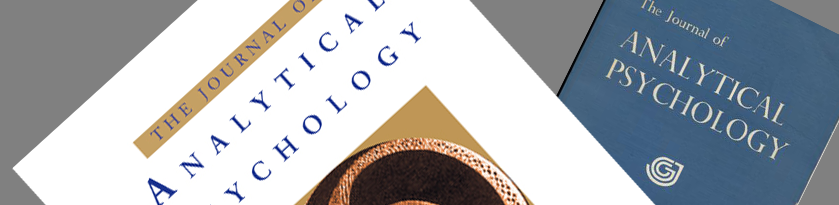
The June issue of the Journal of Analytical Psychology, Early View, is introduced by co-editors Carolyn Bates and Arthur Niesser, who note that a notable rise in submissions has produced a larger-than-usual collection this time. It spans childhood trauma, autism, ethical transgressions in the consulting room, ageing, transgenerational trauma, language, and neuroscience’s relationship to archetype theory. They highlight the issue’s quartet of papers in dialogue on gender fluidity and transgender issues, as well as the Film and Culture section’s four essays on Barbie. The editors also pay tribute to Ladson Hinton, in a moving obituary by Hessel Willemsen honouring an analyst and phenomenological thinker whose work centred on presence, paradox, and the unfolding of lived experience. They also preview the JAP’s next “Meeting the Author” event on November 14 with Donald Kalsched, discussing his Fordham Prize-winning paper on war and the analytic field, and note the call for papers for the 2027 JAP International Conference in Split, Croatia.
Turning to the papers themselves, the issue ranges widely across the field. Julian Masters’ “The Deal With Wolves” traces the analytic journey of a woman whose childhood trauma and later autism diagnosis shaped a split between outer adaptation and inner life, centred on a recurring dream of wolves demanding the soles of her feet in exchange for survival. In the issue’s open-access piece, “The Training Complex: Shattering of the Coniunctio, Boundary Violation, and Sibling Turbulence on the Horizontal Plane,”(open access) Anne Marie Allen writes from personal experience of her own analyst being suspended after a boundary violation with a fellow trainee. Turning to Jung’s concept of the alchemical vas, she tries to make meaning of the collapse of the analytic container, describing the shock, derealisation, and sense of betrayal that followed. Drawing on Jean Kirsch’s reflections on John Perry and Glen Gabbard’s decades of writing on sexual boundary violations, Allen argues that such ruptures are rarely contained to the individual analytic pair. She proposes the concept of a “training complex,” in which the vertical dynamic between analyst and patient becomes entangled with horizontal sibling dynamics among trainees, so that a single violation can spread through an entire training institution as a form of collective psychic injury, rather than remaining a private wound.
Two papers bring neuroscience into dialogue with analytical psychology. Celia Ortega Gómez and José Luis Díaz Palencia propose, speculatively, that archetypal dream symbols may correspond to quantum-mechanical brain processes, using synchronicity as a case in point. Oliver Dale and Andrew John Howe draw on Affective Neuroscience to argue for a model of the archetypal Self grounded in subcortical affect alongside a self-reflective ego.
Two further papers turn to ageing: Ruth Oreschnick’s “Songs of the Self” follows a dying woman using music and the Orpheus myth to integrate long-suppressed parts of herself, while Angela Yu-Ting Wang revisits Jung’s “The Stages of Life” alongside Lars Tornstam’s gerotranscendence theory, illustrated with a clinical case of grief and cultural ritual in later life.
Mark Winborn’s “Finding the Poetic Voice in Analysis” argues for more attention to language itself, not just image, as a route to affectively transformative interpretation. Catriona Wrottesley introduces the concept of “Transgenerational-Affective Atmosphere,” linking psychoid unconscious, synchronicity, and feeling-toned complexes. And Christian Roesler applies grounded theory methodology to a large body of dreams to track the child archetype empirically, lending support to Jung’s assumption of the autonomy of archetypal elements.
In an interview with training analyst Martin Schmidt conducted by Peggy Vermeesch, the SAP training analyst speaks at length on individuation, the Self, and decades of clinical and teaching experience across Russia, Ukraine, China, and Central Europe. Schmidt draws a central distinction between Jung’s dynamic Self and Freud’s more static conception of the psyche, arguing that decisions made from the ego alone (like career, partner, home) tend toward convention, while those made in dialogue with the Self open onto vocation and meaningful connection. The conversation covers his years working with psychotic patients in psychiatric rehabilitation, and the cultural complexes he has observed in Russia – including a “Babushka complex” of dominant grandmothers. He also elaborates on his research into beauty and the maternal origins of aesthetic experience, and engages in a frank discussion of eroticized trauma and transference drawn from his co-edited volume on trauma. He closes by reflecting on his years training at the SAP under Michael Fordham’s developmental school, and on a favourite line from Jung: that life’s greatest problems are never solved, only outgrown.
This issue also continues its quartet of papers in dialogue on gender fluidity and transgender issues, an exchange running from Marchiano, Withers, and Papert’s critique through Tyminski’s response, the International Queer Jungian Initiative‘s rebuttal, and Karen Herdzik’s evidentiary contribution, which we’ve covered in more detail previously. Also in this issue are various essays on Greta Gerwig’s Barbie in the Film and Culture section, and several book and journal reviews.
This early view edition is available now, though with limited access. Full publication as the official June 2026 issue is still pending.