
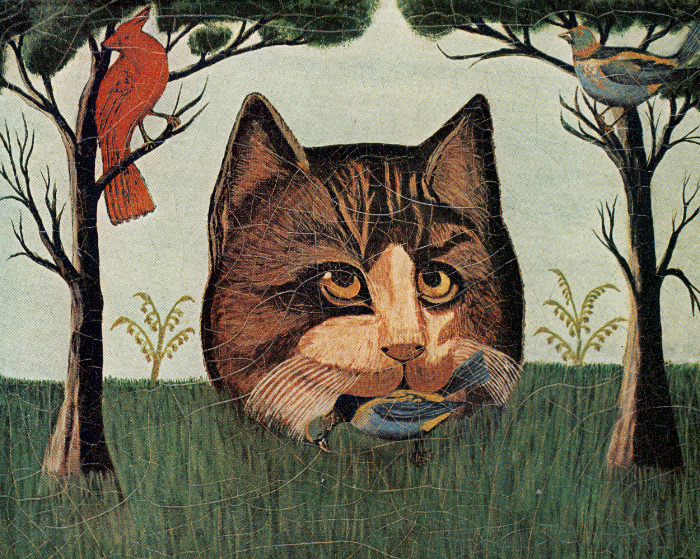
From the moment they first emerged from the wild and forged their wary affiliation with human beings, cats have largely defined the terms of their self-domestication. Much to the delight of their admirers, the tame and the tiger dwell within them in sinuous, if paradoxical accord. Cats travel light, but bring whole other worlds in tow. In their realms, primordial jungles sprout invisibly in living rooms, forest brooks overflow a water bowl, rocky outcroppings rise up from windowsills. Inveterately curious, they leave no stone unturned. Keep in cat company and you observe how intimately they traverse the liminal and the nighttime, gazing out from their darknesses with full-moon eyes and secret smiles. How inscrutably they preside over the rites and ceremonies of their feline rhythm of life.
Cats have inspired potent human projections, both positive and negative. The ancient Egyptian sun god Ra may appear in the guise of a ferocious Tomcat delivering a killing blow to the Apophis serpent of primeval chaos. Buddhist monasteries have welcomed cats not only as protectors of the sacred texts against the destructive gnawing of mice, but as unobtrusive companions who share their capacity for quiet, orderly self-containment. In fairy tales, a cat may assume the role of a psychopomp whose nervy instinctual vitality compensates for the over-refinement and “sublimated” instincts of the human hero or heroine. The widely seen maneki-neko (beckoning cat) in Japanese culture, which invites customers into shops and brings luck and wealth to homes, symbolizes the cat’s positive and fertile energy.
In the eyes of their detractors, on the other hand, cats have often been viewed as cruel, self-serving or aloofly unloving. In Buddhist folklore, a rat dispatched to bring back medicine for the dying Buddha never completes its mission, because a cat kills and eats it along the way. Christian culture has often associated the cat with the subversive power of the devil. Depicted as roaming nocturnal alleyways with randy abandon, capable of stealing the souls of the dead or the breath of babies, cats were easily targeted as witches’ familiars and subjected to frenzied persecution.
But individuals who have the good fortune to be beckoned by the interior cat roaming through their psyche, may find that it can lead them to the central hearth of their Original Home. Looking through the “bright carpet” (tapetum lucidum) that lines the retinas of feline eyes and concentrates all the separate gleams of available light, we can learn to hunt in psyche’s darker landscapes for the hidden parts of ourselves and carry them out, unapologetically, into waking day.