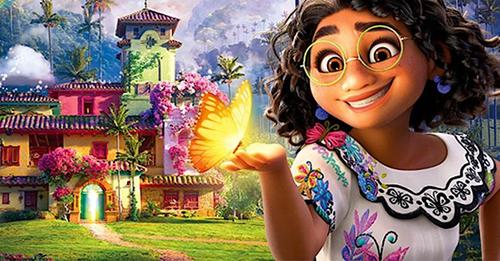
In this closed group experience we will examine some of the archetype, symbols and motifs of the Disney film Encanto and how it can help us deepen our understanding of psychology and some of the stories we live.
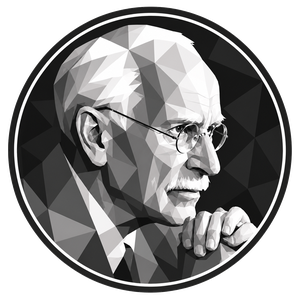
Carl Jung, suggested that people express archetypes throughout their lives from the collective unconscious. His successor, Donald Kalsched, further developed that to talk about archetypes of children who survive trauma which is related to family systems theory.
Their combined work is that people in families respond to trauma–in the Madrigals’ case, intergenerational trauma experienced directly by Alma and passed down through the family–by embodying specific predictable roles that serve to help the family function. But these roles are hard on the members, and often aren’t adaptive in the greater world, because they are ultimately common trauma responses. In Encanto, we see all these roles, and classic family systems theory, pop up from the very first song–“The Family Madrigal” can be understood as a tour of both the family members and their role adaptations within a system that is, contrary to Mirabel’s description, not quite “a perfect constellation.”
The film can also be read as an allegory for group psychology. The characters in Encanto who inherit a singular “gift” believe that each gift must be harnessed for the good of the village, group analysis understands individuals insofar as they provide a skill, craft, or service that addresses a need of the whole group. For those who have a particular gift (also sometimes referred to as a disturbance) located within them, it is natural to feel that we have to carry these roles to earn belonging. The character most exemplifying this dynamic is Mirabel’s hulk-like sister Luisa, who is overburdened by the strenuous labor she is required to carry out for the village. As the physical tasks mount for Luisa, she feels her power and passion ebbing away. The group has to learn to share the load and let this pressure be redistributed so the burden is not just hers alone.
There are many other ways we can connect with the story and the group, following a presentation will have an open discussion space to explore ideas, questions and associations.
What to Expect
In the session there will be:
– A reading/viewing of all or part of the story
and then a presentation thinking about:
– Symbols, archetypes and imagery in the tale
– some psychological interpretations
Following the presented material, the group will spend the remaining time in the session reflecting on the presented material.