
The Journal of Analytical Psychology has two significant offerings on the horizon, an experiential workshop this May, and a major international conference in 2027 that is now open for paper submissions.
JAP International Conference 2027: Call for Papers Now Open
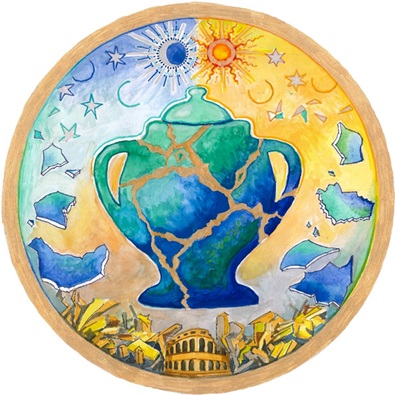
The JAP has announced its International Conference 2027, to be held in Split, Croatia from October 14 to 17. The theme is The Space Between: Its Limits and Possibilities, Collapse and Metamorphosis in the Analytic Vessel and the World.
The conference invites reflection on the liminal spaces of analytic work: the thresholds where emotional experience exceeds symbolisation, where the frame is tested, and where meaning may be absent, emergent, or in the process of transformation. Collapse, impasse, and uncertainty are not treated as failures here, but as the very conditions in which psychic movement, creative emergence, and metamorphosis become possible.
The call for papers is broad and inclusive. The organising committee welcomes clinical contributions exploring early or unformulated states of mind, shared unconscious processes, somatisation and shared psychosomatic states, transference and countertransference dynamics, and the analyst’s capacity to remain present at the limits of what can be held or known. Equally welcome are contributions that situate analytic work within the wider cultural, historical, political and technological context, including reflections on AI, psychedelics, intergenerational and collective trauma, and cultural upheaval.
Proposals of 500 words should be submitted by 31st July 2026 to Esther Waldron, Managing Editor, at esther@thesap.org.uk.
A Workshop with Dr Peter Dunlap, May 23, 2026
On Saturday May 23, the JAP hosts an online experiential workshop with Peter T. Dunlap exploring how small-group work can activate what Jung called psychocultural development. Drawing on his experience convening Belonging, Becoming, and Engaging (BBE) groups, Dunlap introduces the concept of “moral attention” and examines why today’s cultural and socio-political crises cannot be separated from the epidemic of loneliness, and external problems cannot be separated from internal psychological life.
Participants will explore how ideologies, underlying worldviews, multigenerational histories, and unresolved trauma shape both psyche and society, and how small groups can become living laboratories for belonging, shared becoming, and transformation. Visit the SAP website to book.