
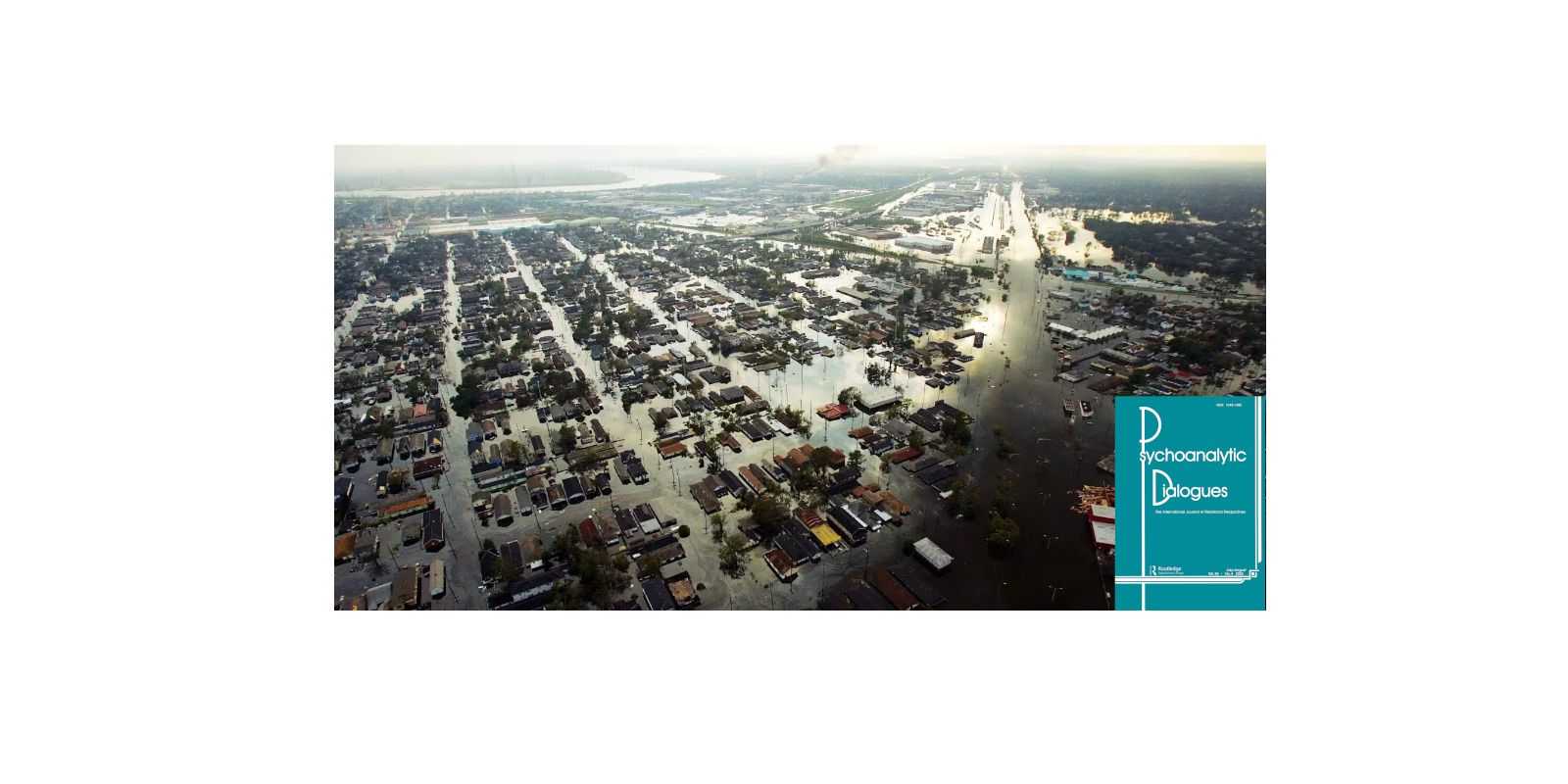
This August 2025 issue of Psychoanalytic Dialogues, presents a collection of provocative articles addressing contemporary challenges in psychoanalytic practice and theory. What makes this issue particularly notable is its dialogue format, where each major article generates substantive responses from other scholars, creating rich, multi-voiced conversations around complex themes.
The issue opens with Ghislaine Boulanger’s I Don’t Want This Knowledge: The Aftermath of a Natural Disaster (open access), which examines the psychological aftermath of natural catastrophes and the resistance that emerges when individuals are confronted with traumatic knowledge they feel unprepared to integrate. Boulanger’s work explores the complex dynamics of denial, dissociation, and protective mechanisms that people employ when faced with overwhelming realities that shatter both physical environments and psychological frameworks.
Sarah Schoen contributes Erotic Entanglements in the Search to Be and Belong: Traversing the Forcefield of Dependency and Desire, examining the complex intersection of erotic feelings, dependency needs, and the fundamental human search for belonging within therapeutic relationships. Her work generates substantial dialogue through two substantive discussions: Dianne Elise’s Analytic Eroticism: Commentary on Schoen’s ‘Erotic Entanglements and Janine de Peyer’s Ecstasy and Agony: When Too Much is Not Enough, both of which engage with the challenging dynamics of desire and dependency in analytic work. Schoen responds with Desire as Psychoanalysis’ Muse: The Unbearable Permeability of Wanting, exploring how desire functions as both creative force and destabilizing element in psychoanalytic process, suggesting that the therapeutic encounter’s erotic dimensions serve as essential catalysts for psychological understanding rather than obstacles to be managed.
David G. Cushman presents Who Gets to Be a Child? Clinical and Cultural Reflections on Racism, White Infantilization, and Kyle Rittenhouse, a bold examination of how racial dynamics influence perceptions of childhood, innocence, and culpability in American culture. This article generates two responses: Brianna Suslovic’s Reflections on Boyhood as a Non/Human State and Marsha H. Levy-Warren’s Amplifying Cushman’s Adultification and Infantilization (open access), with Cushman offering a reply in Possibilities and Expansion for Adultification Bias and White Infantilization. The exchange examines how racialized perceptions of childhood and development create systematic inequalities in how young people are understood and treated by both clinical and legal systems.
The issue concludes with Charlotte Curtis’s Obscura/Lucida: The Punctum of the Queer Image, which draws on photographic theory to explore queer identity and visibility within psychoanalytic frameworks. This article prompts responses from Ken Corbett in Head Cinema, Transitional Space, and the Archive of the Analyst (open access) and June Lee Kwon in The Moonkeepers (open access), with Curtis responding in The Verdant Archive, creating a rich dialogue about queer theory, visual culture, and psychoanalytic understanding.
You can read the open access articles as well as see the full issue, here.