
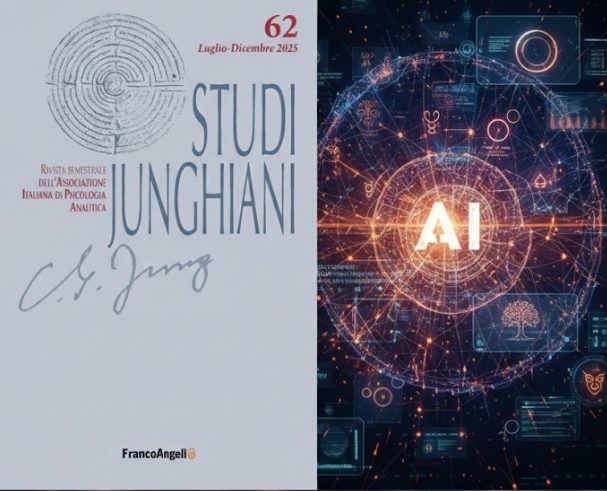
The latest issue of Studi Junghiani, published February 18, 2026, offers a diverse collection of scholarship spanning trauma, collective memory, artificial intelligence, and cultural analysis. The featured articles section opens with Fabrizia Termini’s exploration of Weiss and Bernhard in relation to the two souls of psychoanalysis, examining the footprints of depth psychology’s divergent traditions. Wanda Grosso addresses the shared experience of trauma between patient and therapist, weaving together theory, technique, and clinical work with traumatised children. Dragana Favre takes a Jungian lens to the emotional legacy of Yugoslavia, exploring what it means to be Yugoslav today through themes of unity and separateness in post-dissolution identity. Riccardo Gramantieri ventures into unprecedented territory with a proposal for an “artificial collective unconscious,” engaging with AI and its psychological implications.
The issue’s special sections provide additional breadth. In Amplifications, Valentino Franchitti reports on the 23rd International IAAP Congress held in Zurich. The Analytical Psychology and Art section, curated by Cristina Brunialti, features Gerardina Papa’s reflection on “where images happen,” examining the intersection of art and analytical psychology at the Mattatoio Festival. The Other Perspectives section, curated by Costanza Jesurum, includes Roberto Salati and Cesare Secchi’s analysis of the 2025 British miniseries Adolescence, exploring mental suffering and destructive acting out in adolescence, alongside Monica Luci’s examination of Jonathan Glazer’s film The Zone of Interest. The issue concludes with book reviews edited by Giancarlo Costanza and Valentino Franchitti, and memorial tributes to departed colleagues by Antonello Fresu, Pani Galeazzi, and Anna Maria Sassone.
The full issue is available to download in Italian, here.