
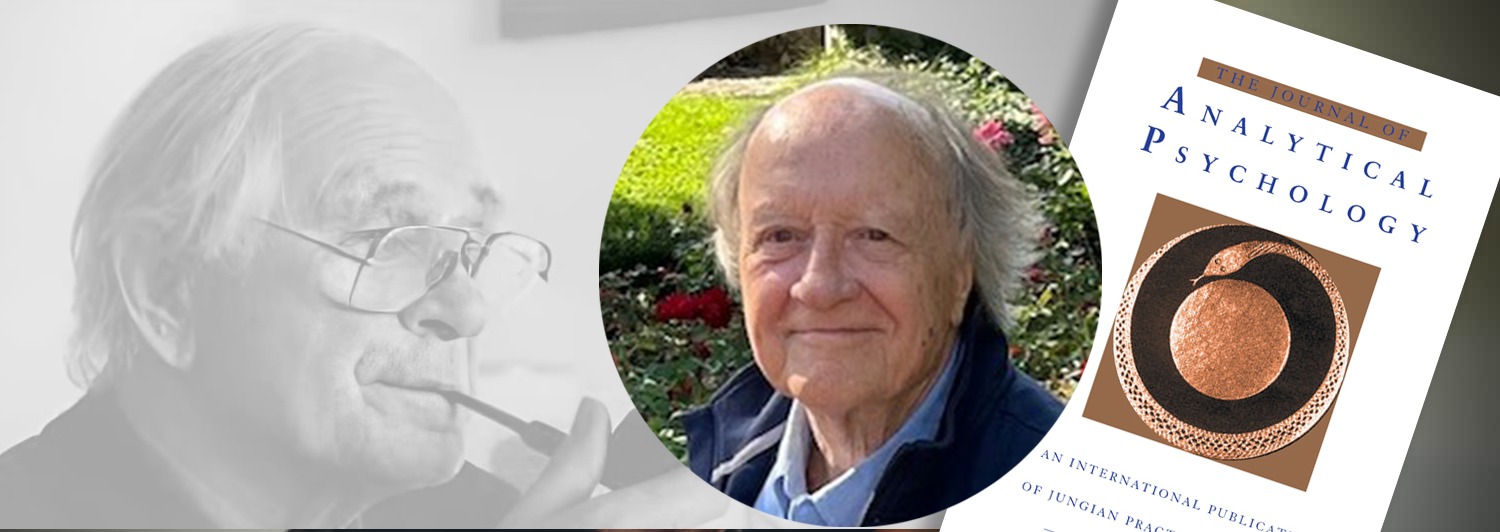
The Journal of Analytical Psychology (JAP) has announced Donald Kalsched as the winner of the 2026 Michael Fordham Prize for his paper War in the Consulting Room: When Rage and Hatred Enter the Analytic Field, published as part of a special issue on “War: Archetypal Energies, Cultural Discontent, Internal Discord” (September 2025, Vol. 70, No. 4, pp. 663–682). The paper is available for free download at https://doi.org/10.1111/1468-5922.13113.
He was selected from a shortlist of five papers, selected through an editorial voting process led by the JAP editorial team. The other four shortlisted papers were Barry D. Proner’s Thoughts on Dependency, Trust, Perversity and Addiction in the Analytic Relationship, which places the tension between an individual’s inborn creative potential and tendencies of destruction at the centre of the infantile transference-countertransference, exploring how extremes of fear and distrust in early development can give rise to a defensive structures in the personality; Mark Saban’s Dissolving the Psychological Subject: Inside and Outside the Therapeutic Bond, (open access) which examines the role of affect in individuation, drawing on the French philosopher Gilbert Simondon’s concept of “transindividuation” to argue that powerful affects in the analytic relationship arise not only within the separate psyches of patient and analyst, but within a third, transindividual field between them; Mark Winborn’s Stealth War: Defences, Individuation, and the Analytic Process, which explores the ongoing conflict between defence mechanisms and the psyche’s instinctive drive toward wholeness, arguing that because defences function to maintain homeostasis and resist change, they constitute an anti-individuation force, one that Winborn contends receives insufficient attention in Jungian literature and training; and Luisa Zoppi’s From Word Association Tests to Feeling-Toned Complexes: A Jungian Perspective on Trauma, which argues that Jung’s view of the psyche as a network of complexes is central to understanding and treating trauma, tracing this insight back to his early Word Association Tests and illustrating through clinical material how analysis can work with split-off complexes across an entire analytic journey.
About the Winning Paper
Kalsched’s paper presents a vivid clinical case of enactment between analyst and patient, in which unformulated and dissociated shame in both participants entered the analytic field, giving rise to defensive hatred and what the author describes as a mutual declaration of war. The resulting destructive stalemate was eventually resolved through an imaginative process in the analyst that helped open up underlying vulnerability in both parties, dismantling the angry defences driving the enactment.
The paper draws on a Jungian approach to the imagination and to the psyche’s dissociability, extending these beyond complex theory into the unformulated experience (Stern, 1997) of early attachment trauma, and integrating this with interpersonal and relational psychoanalytic frameworks.
The Journal Editorial Committee highlighted the paper’s masterful synthesis of psychoanalytic theory, its rich and detailed clinical material, and its compelling argument for the connection between preverbal trauma and dissociated aggression, an aggression that cannot be formulated but can be enacted and worked through in the analytic space. The committee praised Kalsched’s courageous self-examination, noting how his case example shows a seasoned analyst continuously interrogating himself “at the deepest levels of reflection and emotion to reach a point of meeting and potential healing.” Kalsched’s previous work on trauma includes Trauma and the Soul: A psycho-spiritual approach to human development and its interruption, and The Inner World of Trauma: Archetypal Defences of the Personal Spirit, both published by Routledge.
The JAP has also announced that a date for an online Meeting the Author event with Donald Kalsched will be announced soon.
About the Michael Fordham Prize
The Michael Fordham Prize is awarded annually by the editors of the JAP, in consultation with the Journal Editorial Committee, to the paper published in the preceding year that demonstrates the most creative and original approach to clinical analytic thinking. The prize carries an award of £250.
Michael Fordham was one of the founding members of the Society of Analytical Psychology (SAP), served as the first editor of the JAP from 1955 for fifteen years, and was also an editor of Jung’s Collected Works. He believed firmly that clinical work must always be at the heart of analytic thinking, providing both the data on which theory is based and the context in which it must be tested. Papers considered for the prize are evaluated on the basis of original contribution to the field, direct relevance to clinical practice, substantial clinical material, and a close, non-theory-driven interplay between that material and theoretical discussion.
Previous Winners of the Michael Fordham Prize
The prize has a distinguished history stretching back nearly three decades. The first recorded recipient, in 1997, was Giles Clark for The Animating Body: Psychoid Substance as a Mutual Experience of Psychosomatic Disorder, a paper that set the tone for the clinically grounded, theoretically adventurous work the prize has come to represent. More recently, the 2023 prize was awarded to Sue Mizen for The Self and Alien Self in Psyche and Soma, followed in 2024 by Leigh Money for Labels and the Self: Identity Labels as Scaffold. The 2025 prize was shared jointly by Jay Barlow for The Umbilical and Robert Tyminski for Humanizing Different Archetypal Expressions of Gender Expansiveness. More information about the prize and its full list of past recipients can be found on the JAP website at thejap.org.