
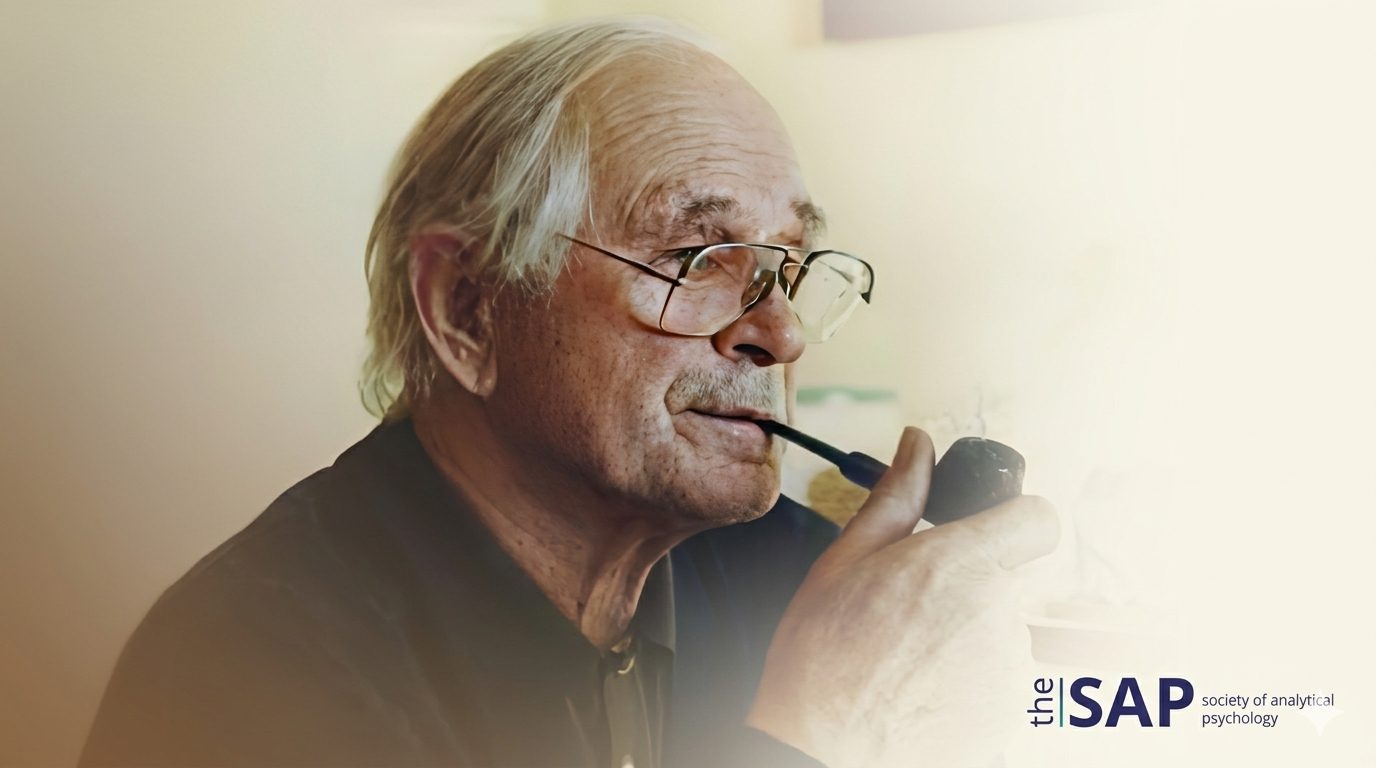
On Saturday, June 6, 2026, the Society of Analytical Psychology will hold a one-day hybrid conference honoring Dr. Michael Fordham (1905-1995) and marking the Society’s 80th anniversary. The event recognizes Fordham as the driving force behind the first formal Jungian analytic training in the world and the father of the Developmental Jungian School. The conference brings together distinguished speakers who have carried forward Fordham’s legacy in various ways. Presenters include James Astor, who delivers the opening talk, Francesco Bisagni, Christine Driver, Jean Knox, Richard Mizen, William Meredith Owen, Barry Proner (via video presentation), and Marica Rytövaara. Professor Richard Mizen chairs the conference, with Jay Barlow serving as convenor.
The day-long programme runs from 9:00am to 6:00pm, beginning with Astor’s opening address, followed by two panel sessions separated by lunch, and concluding with a closing talk by Mizen and Knox. A conference plenary brings together all presenters for final discussion and questions. The hybrid format ensures international participation, with in-person attendance at the SAP Library in London and simultaneous online access.
Registration fees range from £50-£100, click here to secure your booking.
Michael Fordham history and achievements
In 1934, a young Michael Fordham traveled to Zurich intending to train with Carl Jung. He was disappointed; Jung declined him. Rather than abandoning analytical psychology, Fordham returned to London and spent the next six decades building something Jung himself had not: the first formal Jungian training programme in the world, a rigorous engagement with infant observation and early development, and a bridge between Jungian thought and psychoanalytic object-relations theory. As Fordham later wrote upon Jung’s death, the best monument to Jung’s memory would be “to make use of and develop his work rather than let it be passively accepted and sterilised.”
In 1946, Fordham founded the SAP, developed its adult and child training programmes, and secured C.G. Jung’s approval, with Jung subsequently becoming the Society’s first Honorary President. This institutional achievement alone would have secured Fordham’s place in analytical psychology’s history, but his theoretical contributions proved equally influential. Drawing on his work with infants and children, Fordham reformulated the Jungian concept of the Self as present from the beginning of life, introducing the revolutionary ideas of the “primary self” and the developmental processes of de-integration and re-integration.
These theoretical innovations enabled Analytical Psychology to engage more directly with early development and object-relations thinking, placing Fordham in productive dialogue with both Winnicott and Klein while maintaining a distinctly Jungian framework. His work demonstrated that Jungian concepts could speak meaningfully to developmental psychology and psychoanalytic theory without abandoning their archetypal foundations—a bridge-building achievement that continues to shape contemporary practice.
Fordham’s influence extended beyond clinical theory and institutional development into the wider dissemination of Analytical Psychology itself. He co-edited the English translation of Jung’s Collected Works, making Jung’s thought accessible to the English-speaking world in authoritative form. In 1955, he founded the Journal of Analytical Psychology, establishing the field’s premier scholarly publication and serving as its first editor for fifteen years. He was also a founding member of the Royal Institute of Psychiatry, positioning analytical psychology within broader psychiatric discourse.