
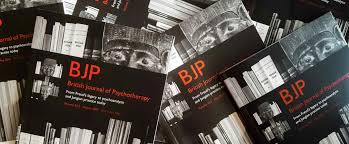
The latest issue of the British Journal of Psychotherapy (Volume 42, Issue 2, May 2026) brings together a thought-provoking selection of clinical and theoretical work spanning psychoanalytic critique, institutional care, psychiatric practice, and personality pathology. It also includes three book reviews covering some of the field’s most contested contemporary territory.
Open Access Highlights: Institutional Defences, Clinical Blind Spots, and the Courage to Reflect
The issue’s most immediately provocative piece is Marcus Evans’ Beyond Affirmation: Lessons from Tavistock, a psychoanalytic critique of identity certainty and institutional defence drawn from his clinical experience at the now-closed Gender Identity Development Service. Evans argues that the drive to affirm gender identity in young people, however well-intentioned, can function as a defence against psychic pain rather than a genuine pathway to psychological integration. Drawing on concepts including symbolic thinking and identity foreclosure, he makes a case for restoring reflective capacity to clinical and institutional responses to gender distress, pushing back against what he sees as the foreclosure of thought under ideological and emotional pressure. It is a challenging, carefully argued piece that is likely to generate significant discussion. It is available to read in full, free of charge.
Also open access is a timely survey-based study examining the personal therapy habits of consultant and trainee psychiatrists in Ireland. The findings are striking: fewer than half of the 139 respondents had ever engaged in personal therapy, most described their experience as short-term and supportive, and burnout was among the leading reasons for finally seeking help. Perhaps most concerningly, only a minority reported confidence in their own psychotherapeutic technique. The authors argue that this points to a systemic gap in psychiatric training with real consequences for patients who present to psychiatric services needing more than medication. A valuable read for educators and curriculum developers, and freely available in full.
Also in This Issue: From the Sword of Damocles to Serial Killers
The issue opens with a free to read editorial, then John R. Paddock offers transatlantic reflections on the state of psychoanalysis and psychoanalytic psychotherapy in the United States, a timely perspective given the current cultural and political climate. Matthew Rinaldi‘s original article on pathological narcissism and borderline personality organisations takes up the image of the Sword of Damocles to explore the precarious psychological structures underlying these presentations.
The issue rounds out with three book reviews: a collection exploring psychoanalytic concepts through culture and the arts, a psychoanalytic exploration of female-to-male transition by Serena Heller, and Brett Kahr’s forensic psychoanalysis, ranging from sub-clinical psychopaths to serial killers.
The remaining content is available via subscription or institutional access.
Also Worth Reading: A Recent Open Access Article from the BJP
Not from this issue, but well worth your attention: Matthew Goldreich’s What Is It Like to Be an Infant?, published online in April 2026, is a rich conceptual exploration of neonate subjectivity that will appeal to anyone interested in the intersection of psychoanalysis, philosophy of mind, and infant observation. Taking as its starting point Thomas Nagel’s famous question, “what is it like to be a bat?”, Goldreich turns the same philosophical lens on infancy, asking what we can and cannot know about the subjective experience of the very young. Drawing on Bionian metapsychology, mentalisation theory, and affective neuroscience, the article maps the profound epistemological gap between developed and infantile states of mind, and considers Bion’s concepts of reverie and O as resources for sitting with the inevitable condition of not knowing. It is a quietly remarkable piece, theoretically ambitious, clinically grounded, and available to read in full.