
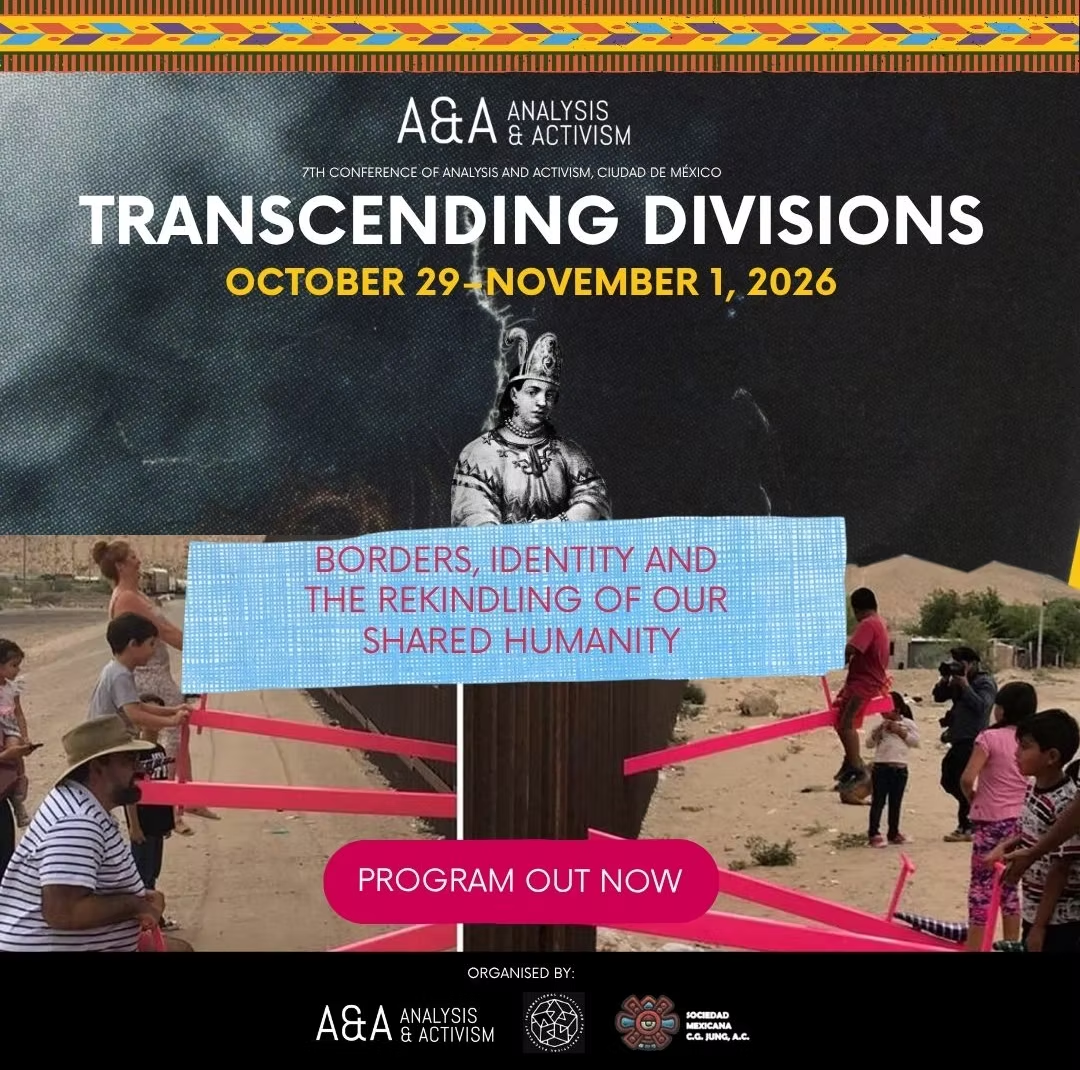
The 7th International Analysis and Activism Conference convenes in Mexico City October 29-November 1, 2026, with a program addressing borders, identity, and belonging through Jungian psychoanalytic and activist lenses. Organised in collaboration with the Sociedad Mexicana C.G. Jung, the conference marks the first time this influential gathering takes place in Latin America.
Program Highlights
The conference opens Thursday evening with a pre-conference workshop, “The Tree of Life – Arbol de La Vida,” led by Emma Wong and Heba Zaphiriou-Zarifi. Each morning begins with a Dream Matrix facilitated by Wong and Robin B. Zeiger, creating reflective space before intensive sessions.
Friday’s program features María Lourdes Albarrán Ampudia examining “Breaking Barriers: The Power of Inclusion” through the lives of three Mexican women who shaped world history. La Malinche, the Nahua translator who navigated complex cultural landscapes during the conquest; Sor Juana Inés de la Cruz, the 17th-century poet and philosopher who defied conventions to pursue learning; and Dolores Del Río, the pioneering actress who broke barriers in Hollywood. Albarrán Ampudia argues that indigenous knowledge along with Spanish language skills, and the meeting of Mexican and American cultures unlocked transformative potential, demonstrating how valuing differences creates more holistic approaches to life.
Andrew Samuels presents “Politics: Sacred and Profane,” exploring the role political activism plays in individuation, and importantly, how non-involvement injures personal growth. Drawing on Brazilian Liberation Theologian Leonardo Boff’s work on inequality, Samuels asks where we get our politics from, suggesting this inquiry should be part of any therapy or analysis.
Monica Luci’s “The Violated Threshold: Liminal Violence, Archetypal Regression, and the Erosion of the Psycho-Political Containment” offers Jungian psychoanalytic reading of contemporary geopolitics, situating borders as liminal spaces where psychic, political, and legal boundaries increasingly fracture. From Russian invasion of Ukraine to war in Gaza, from challenges to asylum politics to aggressive trade policies and territorial claims, Luci identifies normalisation of direct attacks on borders themselves as mediating structures. When such collective containers fail, unmentalised anxiety is discharged through enactment: aggression replaces negotiation, force replaces symbolisation, and the other becomes carrier of projected shadow.
Saturday’s program intensifies engagement through sessions including Rolando J. Fuentes on the hinge as transcendent function while living between cultural borders, Heba Zaphiriou-Zarifi asking where we go after the last frontiers, and Yannis Munro presenting “Non-binary Identities in the Psychoanalytic Field – A Bridge of Reciprocal Affective Communication.” Sessions address HIV as cultural complex of shame, snowflake epistemology and revolutionary consciousness, migration and belonging, psychotherapeutic tools for decolonial and queer praxis, and integral methodology for cultural complexes.
Sunday’s final sessions include Robin B. Zeiger on political activism and the imposter phenomenon, alongside presentations addressing artificial intelligence, border crossings, migrant identity transformation, and perspectives from Romanian and Russian contexts. The conference closes with synthesising conversation integrating insights from the three days.
Context and Significance
For over a decade, Analysis and Activism has explored the intersection of Jungian psychoanalysis and political engagement through conferences in London, Rome, Prague, Ljubljana, and online. This year’s gathering responds directly to global resurgence of authoritarianism, hardened borders, nativism, and anti-immigrant policies. The conference takes seriously Mexican writer Carlos Fuentes’s observation that borders are “scars on the earth, wounds inflicted by history,” and Gloria Anzaldúa’s insight that borderlands exist as psychological states “created by the emotional residue of an unnatural boundary.”
Participants may extend their stay to experience Día de los Muertos celebrations November 1-2, one of Mexico’s most significant cultural traditions, offering embodied encounter with Mexican approaches to death, memory, and continuity. The conference will be conducted in English with Spanish subtitles available. You can see the full program details here and access speaker abstracts and bios here.
You can click here to register.